Reaching GOALS

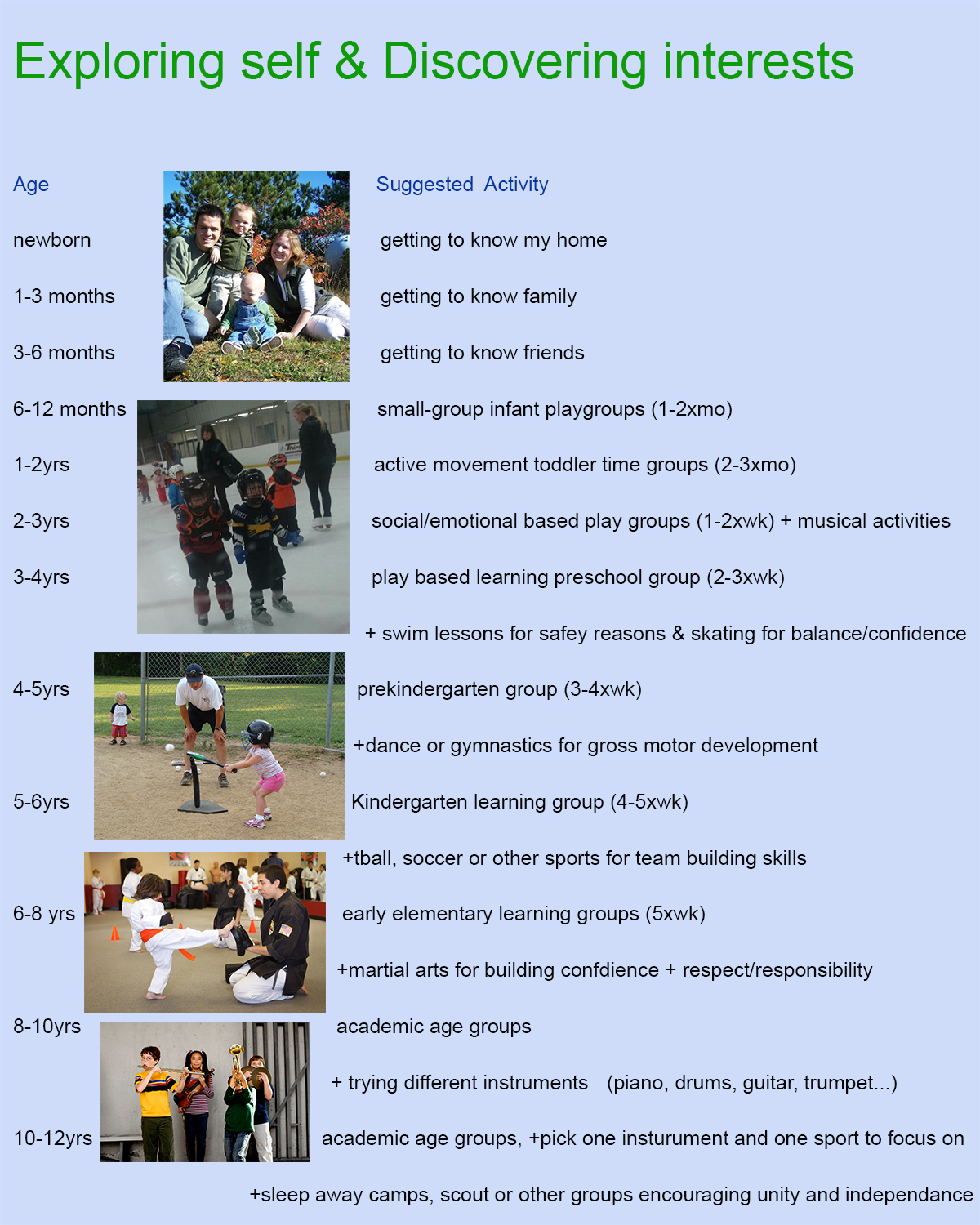
Everyone needs to have goals, and if one is too young to create their own goals – that becomes part of your job. The tough part of making goals for someone is remembering that you are building goals for them – not you.  Just because you never got to play for the NHL or never learned how to play the piano, doesn’t mean you should schedule lessons for them today… When you think about setting goals for another, you should consider their interests, strengths, weaknesses… what end results you are looking for. For example – I simply want my boys to grow up to be happy and healthy men.  Healthy means teaching them today how to pick smart foods and the importance of active play and fresh air (later we’ll worry about other health/safety topics such as those scary sex/drug conversations) … the goal of happy means becoming successful at whatever THEY choose for their future family/career goals.  My job therefore is to teach them about the importance of family and stability.  Please don’t mistake the word stability to mean rich – I truly don’t care if they choose a profession which never affords them a life filled with mansions and limos, I just want them to learn the skills to pay their bills and survive doing what makes them HAPPY.  So how do I help them figure out what would make them happy? Well – I will try and offer them every opportunity to meet new people, learn new skills from various instruments and team work from different sports.  We try to make them aware of different careers, and help them learn about whatever they find interest in (today it’s science – specifically animals, bugs, weather… we went where their minds went…).
exploring

giving them every opportunity to find “their thing”

Now, sometimes these simple plans are easier said than done.  My boys have some challenges that make some group activities difficult, but that doesn’t mean I throw my hands up – it means I encourage them to try their best at each new activity and finish out the session, praising them for every accomplishment.

goalSTARS

8×10 printable reward chart

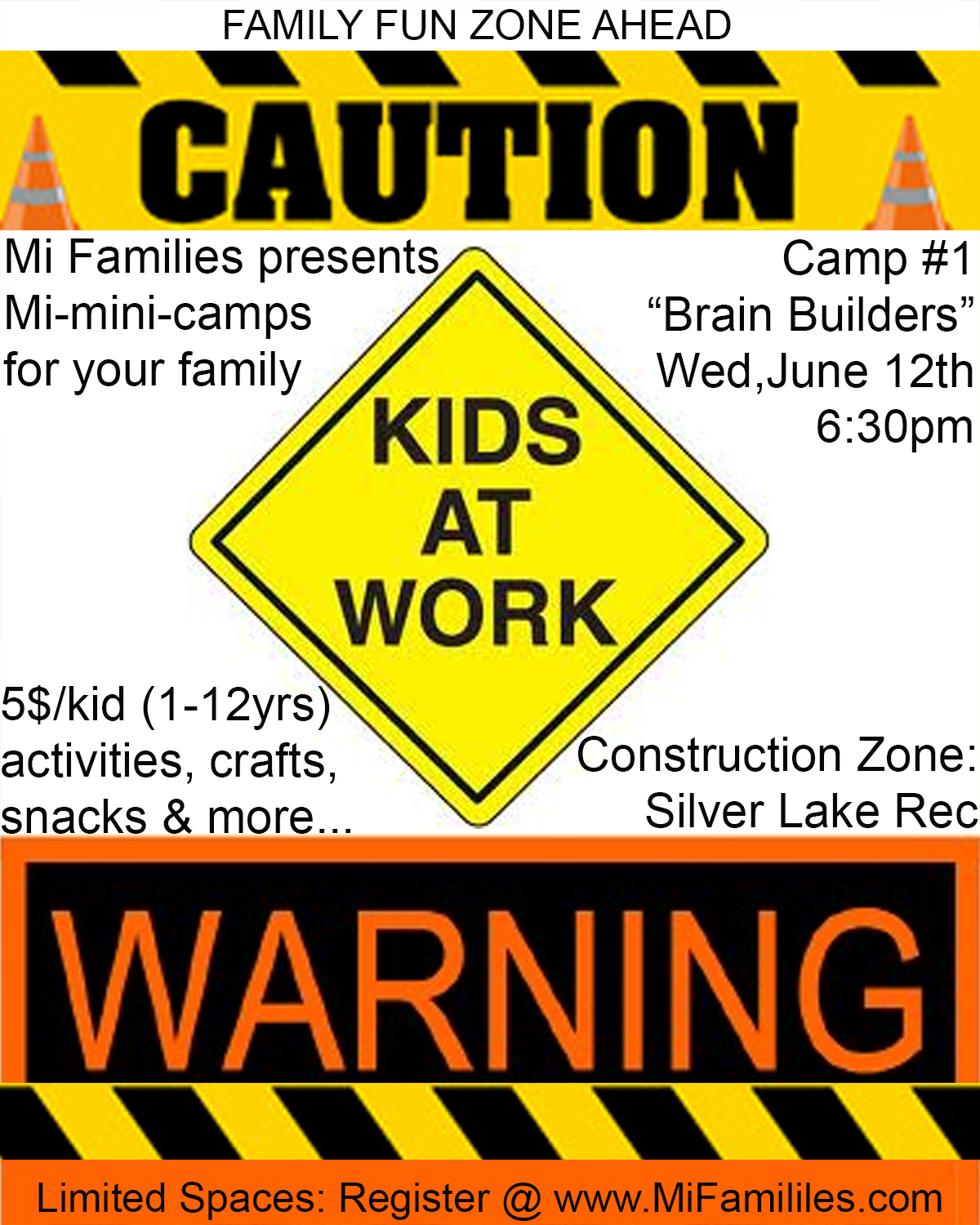
When one of my boys had difficulty at as a toddler during playgroups I was advised to just let him play at home – as that was the easy answer during that moment – but considering long term goals I knew that avoiding the obstacle was not going to help.  So we pressed on and stayed as long as we could during each program, then tried again another time… but we never quit.  We teach our boys that we finish out a program, then if they want to continue on with the next step great, and if not we try another activity next time.  I have no idea what my boys will be when they grow up, and that’s how it should be (in my opinion). I know whatever direction chose will be one that fits them. So far they have plans for becoming an army guy, chef, rockstar, doctor, race-car-driver, a pastor and a flying super-hero…  They are learning that to do any of those jobs they need to learn about those roles and practice the skills.  With summer coming up there are lots of options for practicing skills.  If you have the money look into different camp options that focus on your kids interests (sports camps, music camps, academic camps…); if you can’t afford that option develop a summer program for your child.  There will be more about developing such programs in our upcoming blogs.  If you’re around Traverse City (June 12) we’ll be hosting a family event where you can learn more about creating learning goals for kids.  Register at http://www.mifamilies.com/mi-mini-camps
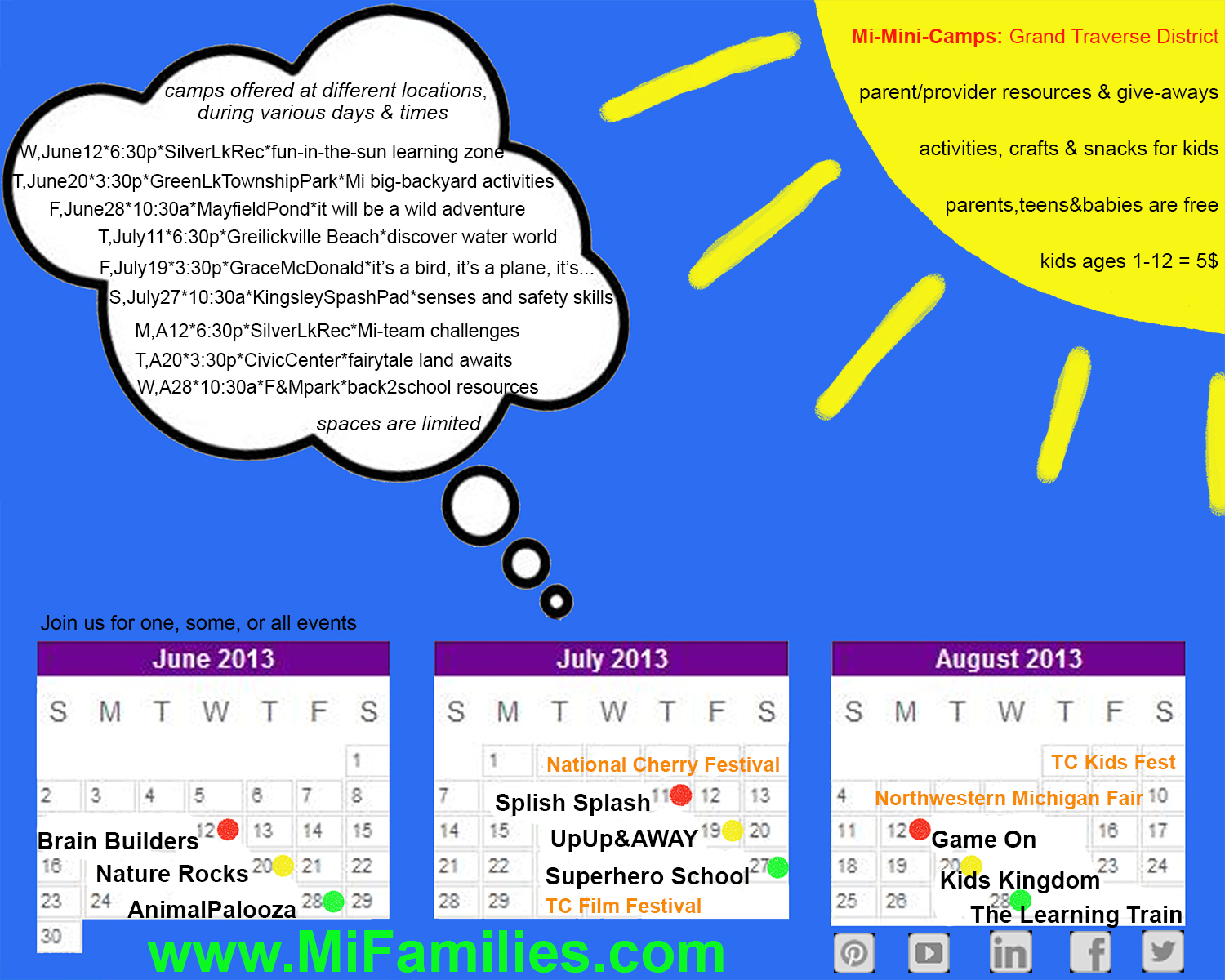
MiSUMMER

SPACES ARE LIMITED

brain

our 1st family camp is coming up quickly so register today!
Posted in Autism Spectrum, Child Development, Education, Health, Learning through Play, Meet our Director, Mi Families, Organization, Parents, Providers, Social Skills, Special Needs, Uncategorized Tagged with: , , , , ,

choosing choices

Last week we were stuck living outta suitcases in a hotel.  I say (or rather write) “stuck” because it was not a vacation plan.  We came back from our spring break vacation to a home that was without heat and freezing (to the point of a frozen fish bowl)! Readers from a far you’ll haveta believe me that spring break does not mean warm weather and our house was 33 degrees! So, while waiting for the heat problem to be fixed we moved into a local hotel for a few days. Living outta suitcases meant little choices for activities keeping our 5&6yr old boys busy.  Luckily the hotel had a pool! BUT it was filled with spring breakers enjoying vacation and since our boys get a bit overwhelmed with chaotic environments this wasn’t always an option.  We brought in some books, coloring activities, a few action figures and other toys, but since they don’t like to sit and entertain themselves quietly for endless hours, this wasn’t always the answer either.

In our last blog we started talking about planning activities and offering choices for activities. This is often easy enough to do, but what’s your plan when you’re not at home and stuck with little or no options to keep kids busy? OR what’s your plan when you are at home, but there are too many new exciting options? When we finally got home it was Easter weekend and between grandparent packages and Easter bunny baskets PLUS our old options that we missed the past week – there were tears from too many choices.

choices

(8X10 printable)

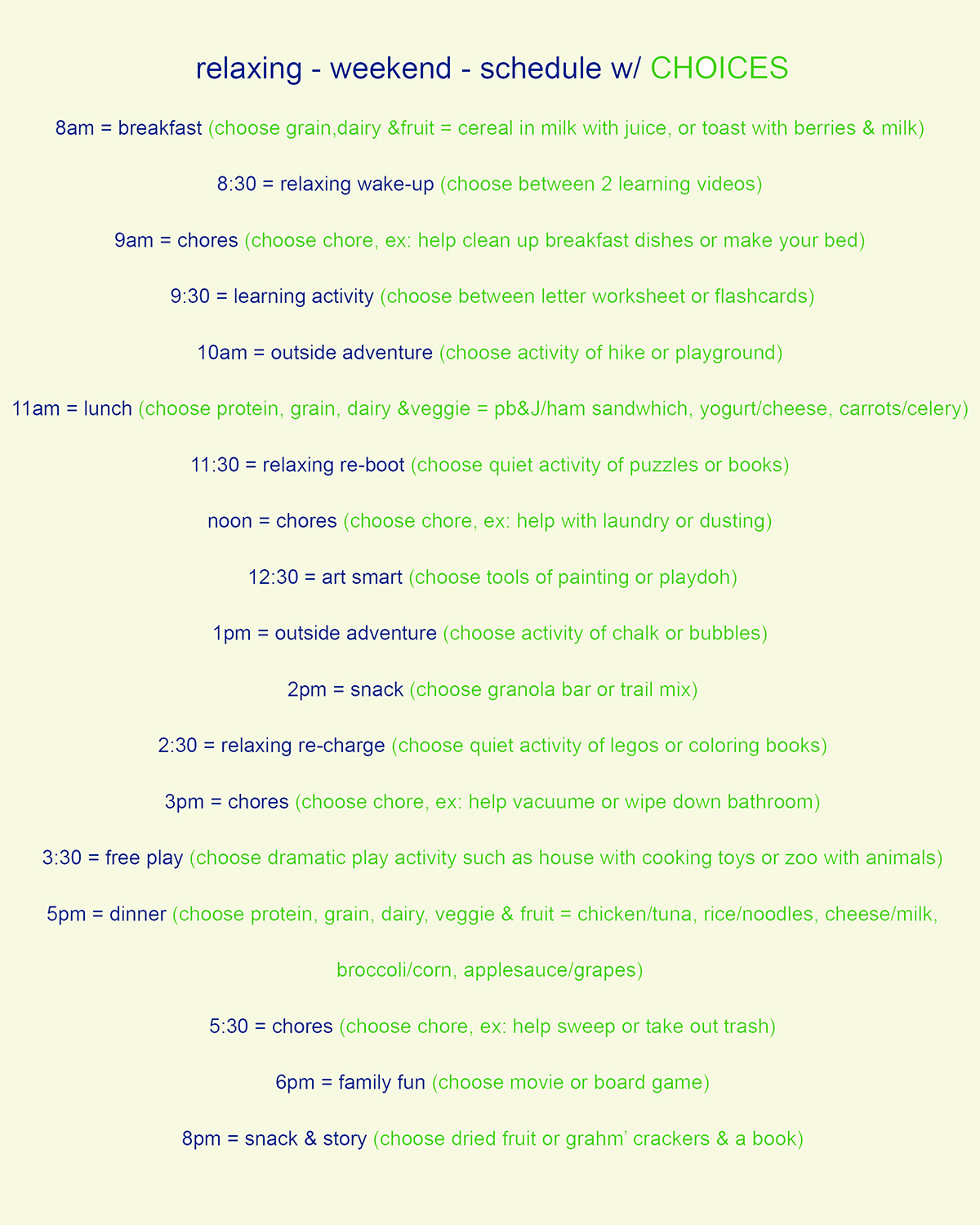
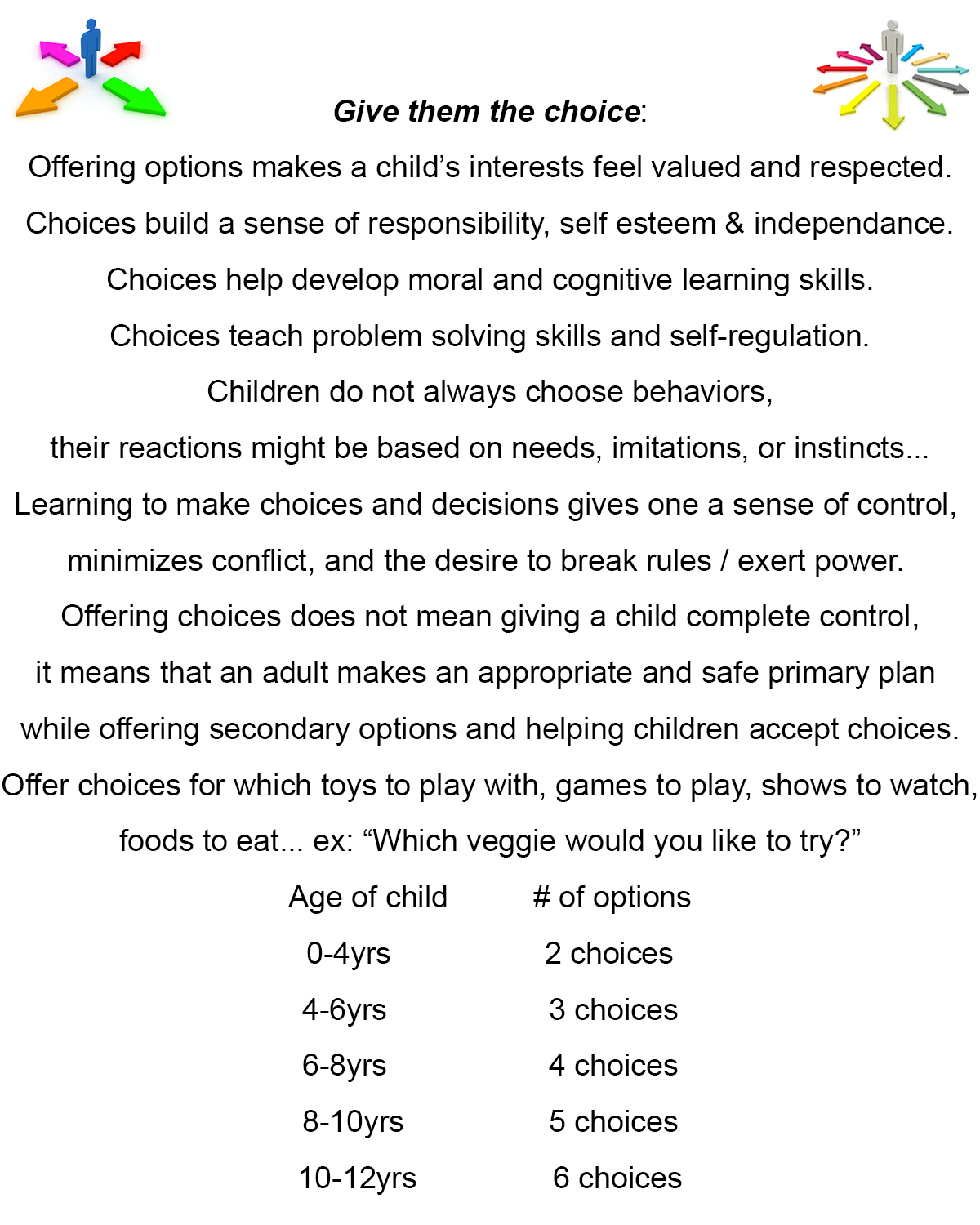
We know that every child is different, so not every chart will work for your kid, but the chart above helps us remember to limit choices to children.  Choices are great as it gives a kid a sense of control, but too many options can overwhelm them.  Some kids have a hard time making decisions so working on small choices is an important skill builder. Start with making choices that are comparable – example: “Which of these 2 games do you want to play?” “Not, do you want to play one of these games or go outside or watch tv or…?” As you start building a predictable schedule/routine use that tool as a guideline for activity planning:

home-schedule

spring

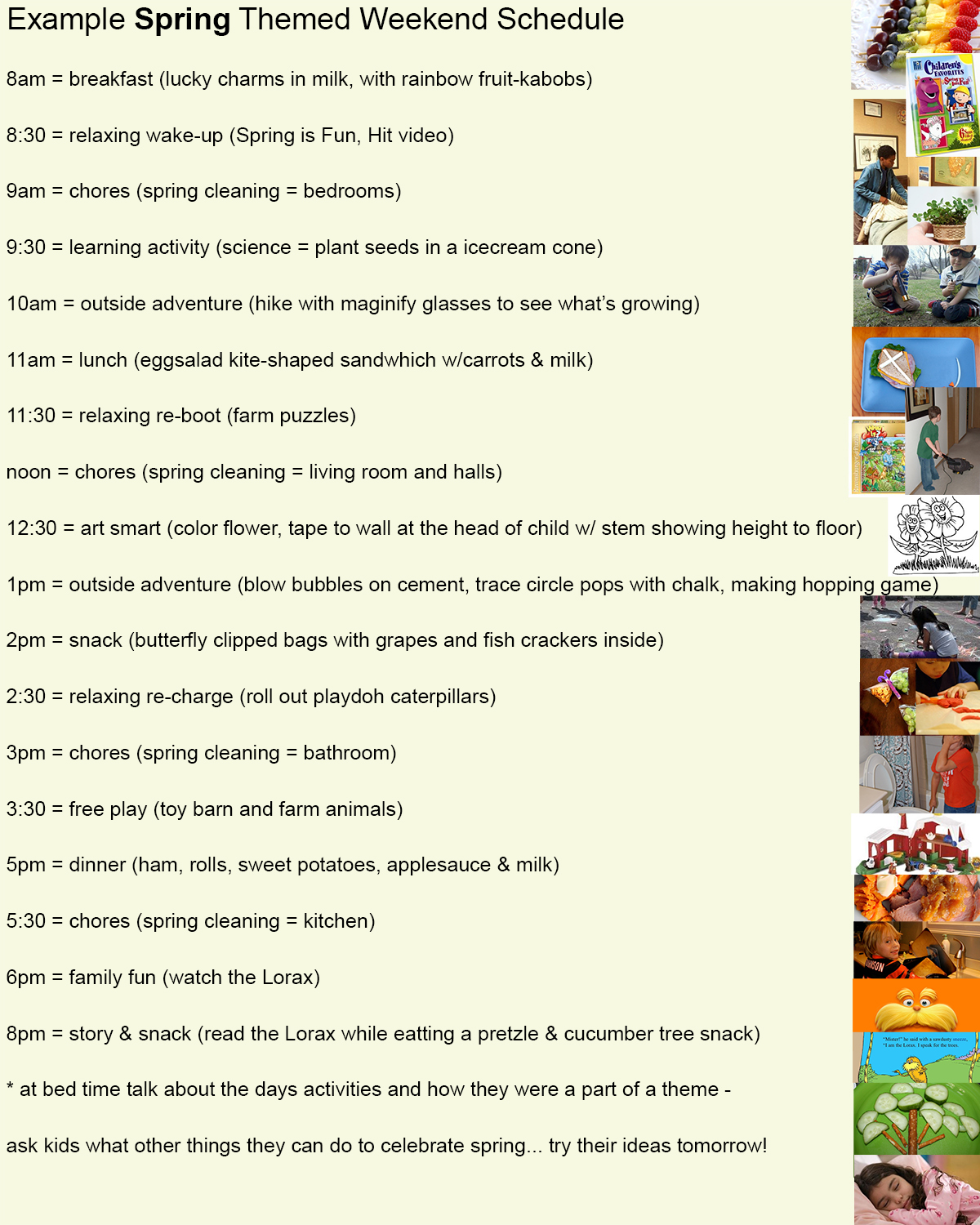
Use the season, upcoming holidays, important family events, etc… to plan the days theme.  Theme’s help keep activities relatable and therefore more memorable.  If you have a child who is struggling with math – use the theme to work on that skill… We learn more by doing and retain more when we enjoy what we’re doing, so have fun teaching your kids.  Days at home offer time to relax our minds and bodies, but should create times for learning and playing in a relaxing / non-threatening way.  It’s hard to learn a new skill when you think your peers are staring at you, so use stay-home-days for their advantage.  As your kids get bigger ask “what do you want to learn/do today.”  Maybe your kid would like help with homework, or practice catching a ball, or time to write in a journal and reflect… Maybe they need help learning how to plan their own days, weeks, months, years… maybe they want to develop future goals…  that’s what blog #13 will be talking about, so join us for that discussion and feel free to write thoughts below:

Posted in Child Development, Curriculums, Education, Family, Holidays, Learning through Play, Organization, Parents, Special Needs, Uncategorized Tagged with: , , , , ,

SCHEDULING your chaos

It’s been a bit over a week since we did the whole “spring forward” time change, but I still hear parents talking about how it’s affecting their homes.  Kids are having a hard time falling asleep and even a harder time waking up. Some kids are acting tired and crabby all day. Providers are noticing that kids are anxious for spring-outdoor-adventures.  Is the time change harder when snow still covers much of Michigan? Is the time change affecting all homes the same? Is there a way to prepare kids for the time change?

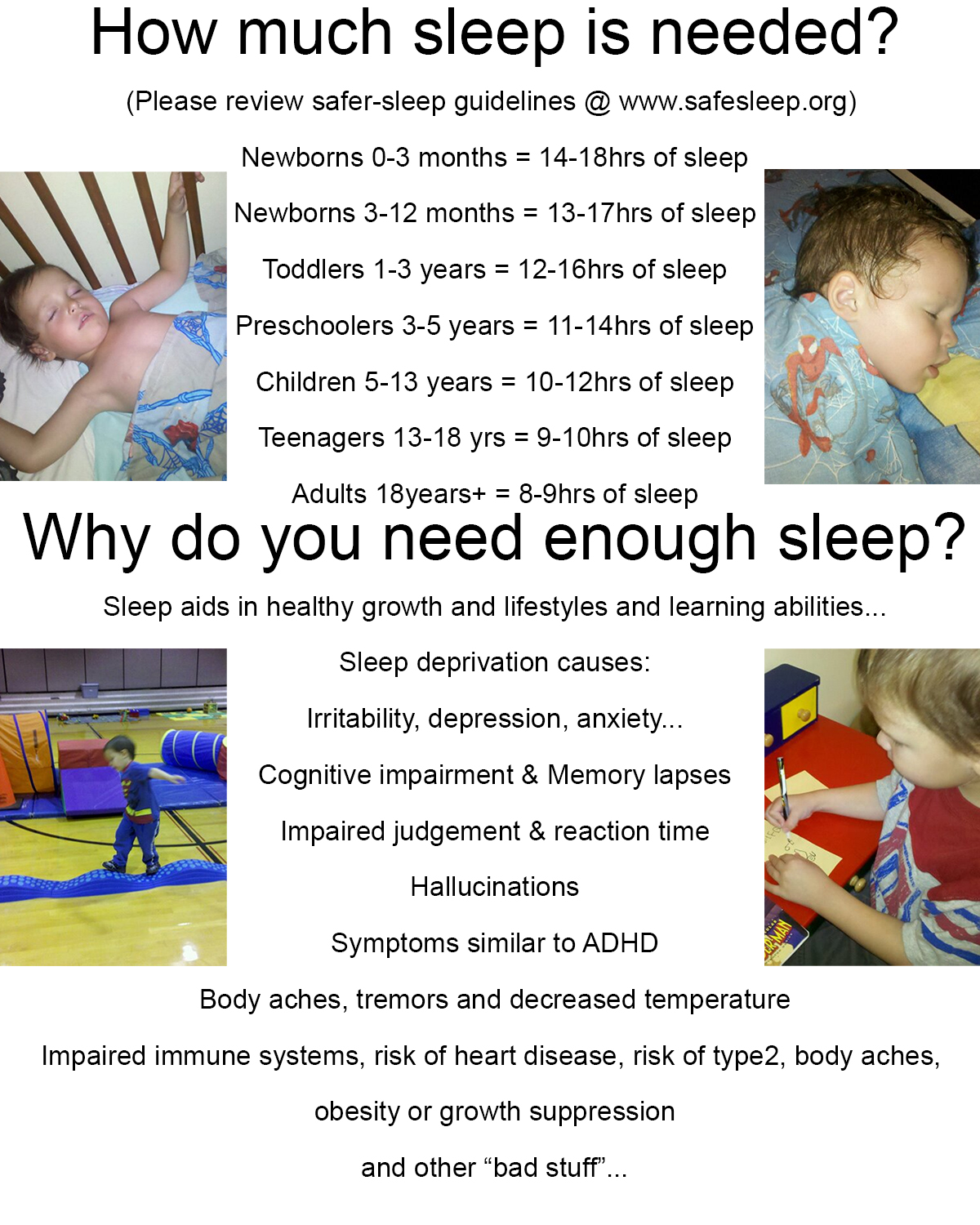
I looked into that question and found a helpful answer – which is that “yeah it’s harder when we can’t feel spring yet,” but homes that prepared their kids had an easier transition.  How did they prepare them? Some parents/providers explained the day-light-savings-concept even to their little ones, then made a visual schedule showing when the sun and moon rise and set.  The week before the “turn your clocks ahead” night they planned out going to bed 10 mins earlier each night so that Sunday morning didn’t feel an hour earlier.  Want your kids to sleep in that extra hour for the “fall back” change? Try keeping them up 10 mins later each night for that week before.  Some people have eternal sleep schedules, some people need to train their sleep patterns.  Here’s how much you should be sleeping:

sleep

does that give you enough reasons to put the kids – and yourself – to bed early tonight?

safer-sleep

why is this posted here? it’s important sleep info for the littlest ones in your care – and b/c if you know they are safe and you are calm that = less chaos !

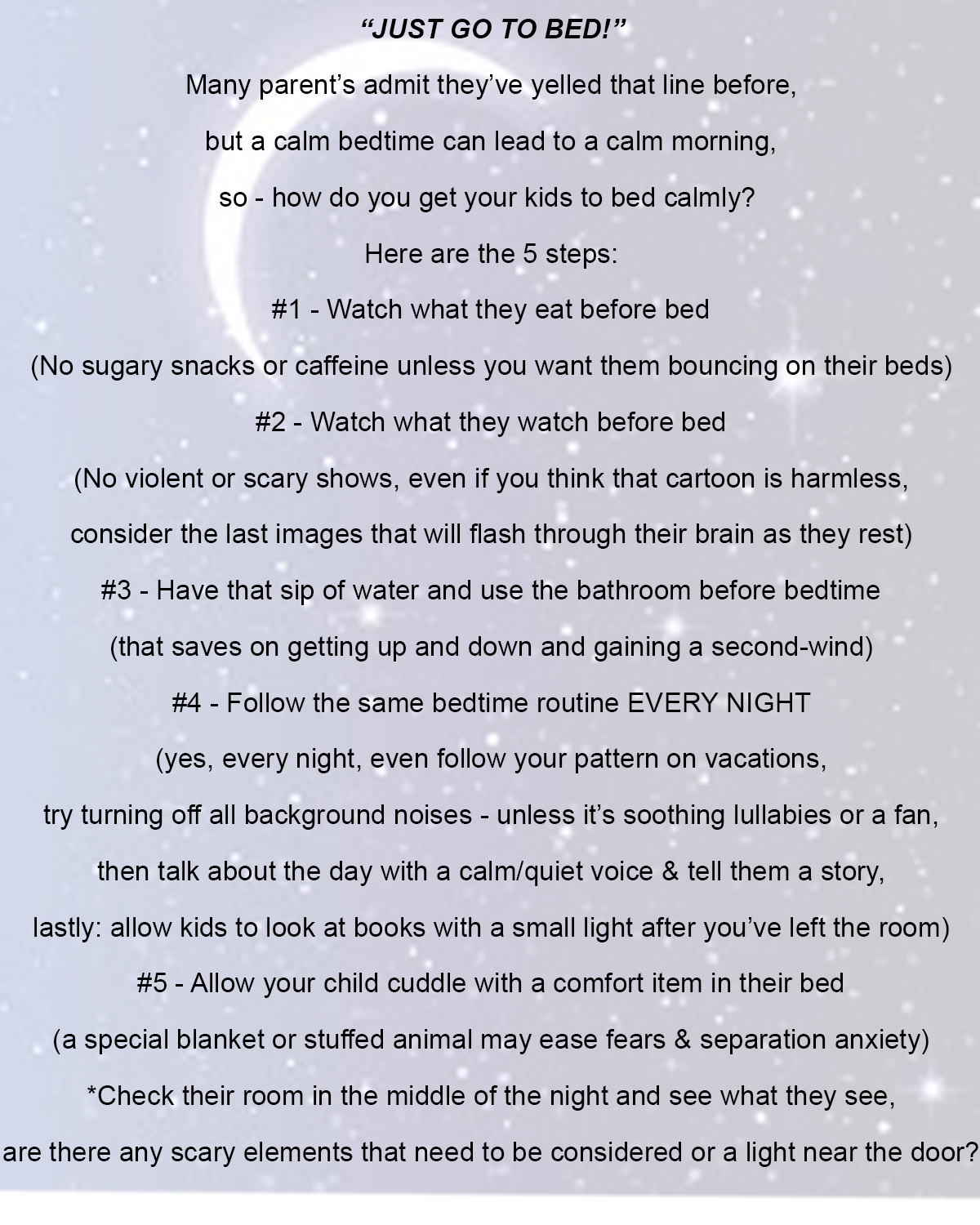
Why are sleep routines important to know about? Because rest is one of those answers to changing chaos to calm in kids behaviors.  Our past blogs have talked about turning chaotic environments into calm spaces and one way is to schedule adequate sleep times.  What if your kid isn’t that one who nicely lays down and falls asleep instantly? (I know my kids aren’t) … Well, here are some tricks and tools to try:

bedtime

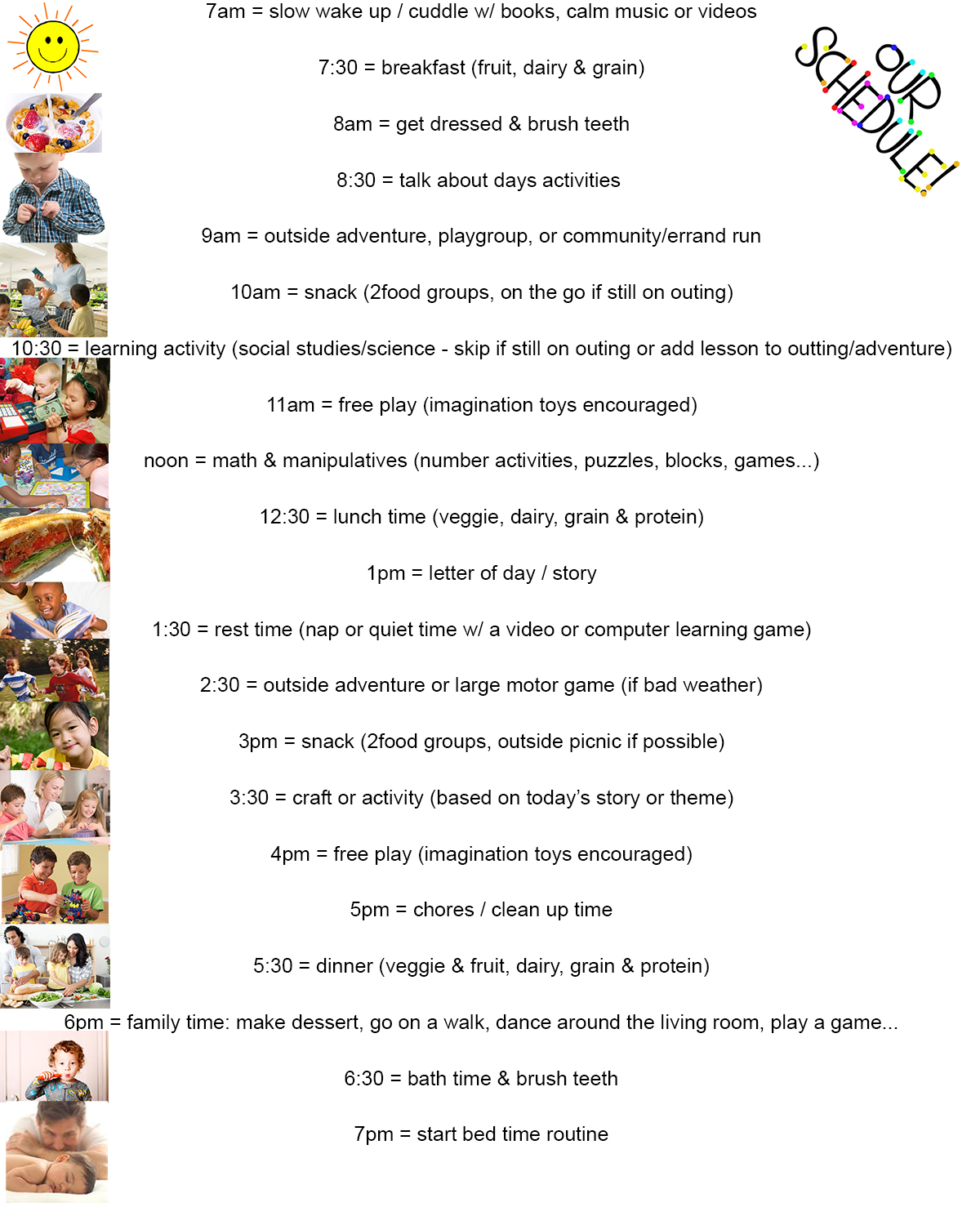
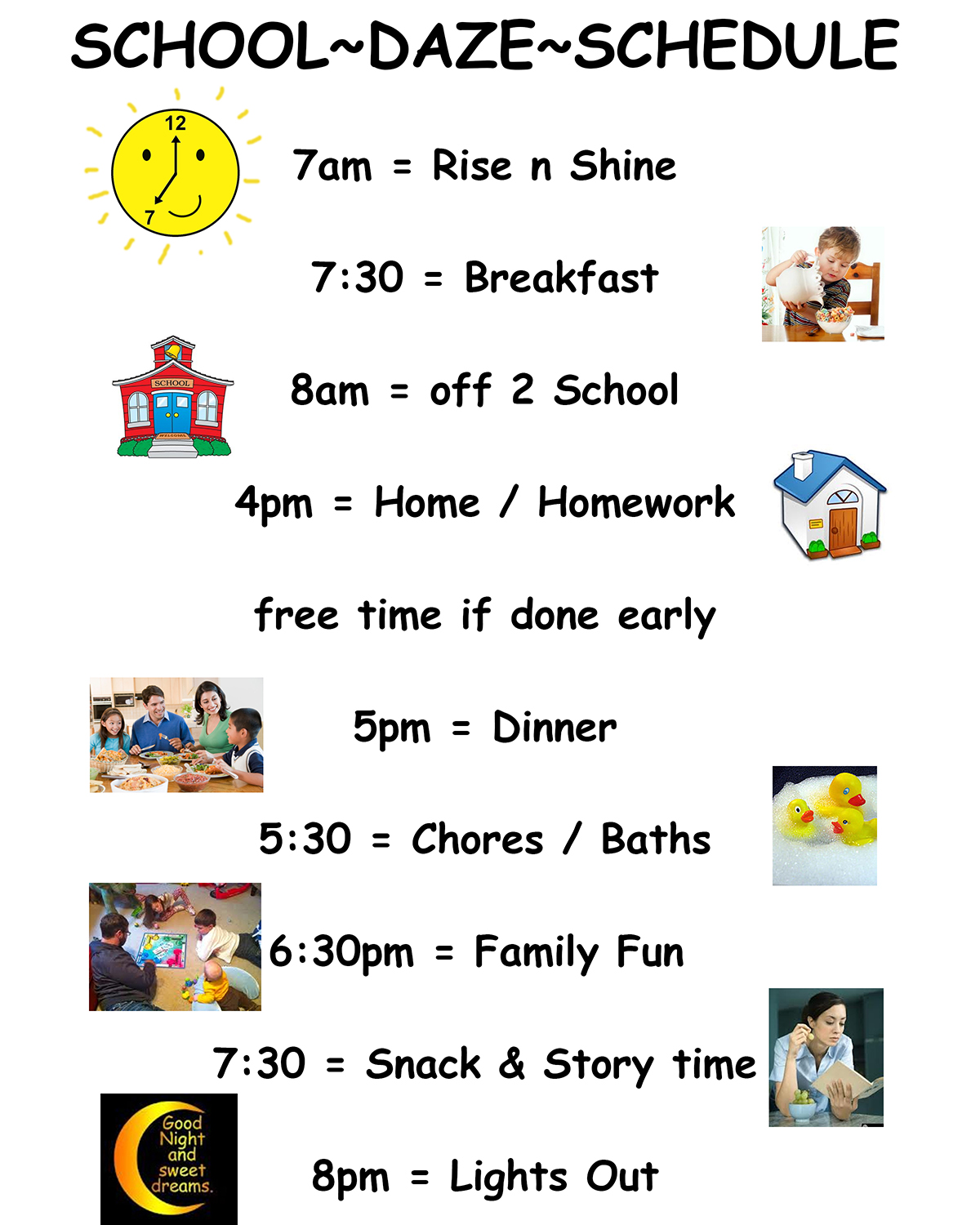
If your day is too busy, your lil’ one might have a hard time winding down for bed time – and on the flip side – if your day is sitting in the house watching tv he or she might not be ready to sleep, because they haven’t burned their energy off yet! So try and schedule your day keeping your kids busy, but with times to relax and times to engage their bodies and minds.  How much of relaxation vs engagement depends on the age/stage of the kids involved.  Stage is often more important that age.  In our house the little brother needs much more physical outlet during the day than his big brother.  Each kid is different so you’ll haveta play around with schedules and see what works best.  Here’s a great example of a daily routine:

pkday

(8X10 printable schedule)

A routine is a repetitive and predictable schedule.  Many parents and professionals believe that routines are the number one way to turn a chaotic child into a calm one.  Once you figure out the schedule that works best for the kids in your care, try and stick with it.  If you have to change up the schedule show them their typical day schedule and point out the activities you will not be doing, and tell them what you’ll be doing instead.  When possible, let them decide parts of their schedule such as “do you want to go outside first or do our coloring page first?” Kids often know what their bodies and minds are ready to accomplish, so listen to their suggestions.  Also, letting them feel they have choices goes a long way for keeping them calm, but limit choices as that can add anxiety with too many options…

We’ll talk more about choices and planning activities in the next blog – so make sure you check back!

Posted in Behaviors, Child Development, Family, Health, Learning through Play, Michigan, Organization, Parents, Providers, Safety, Uncategorized Tagged with: , , , , , ,

A Peaceful Place

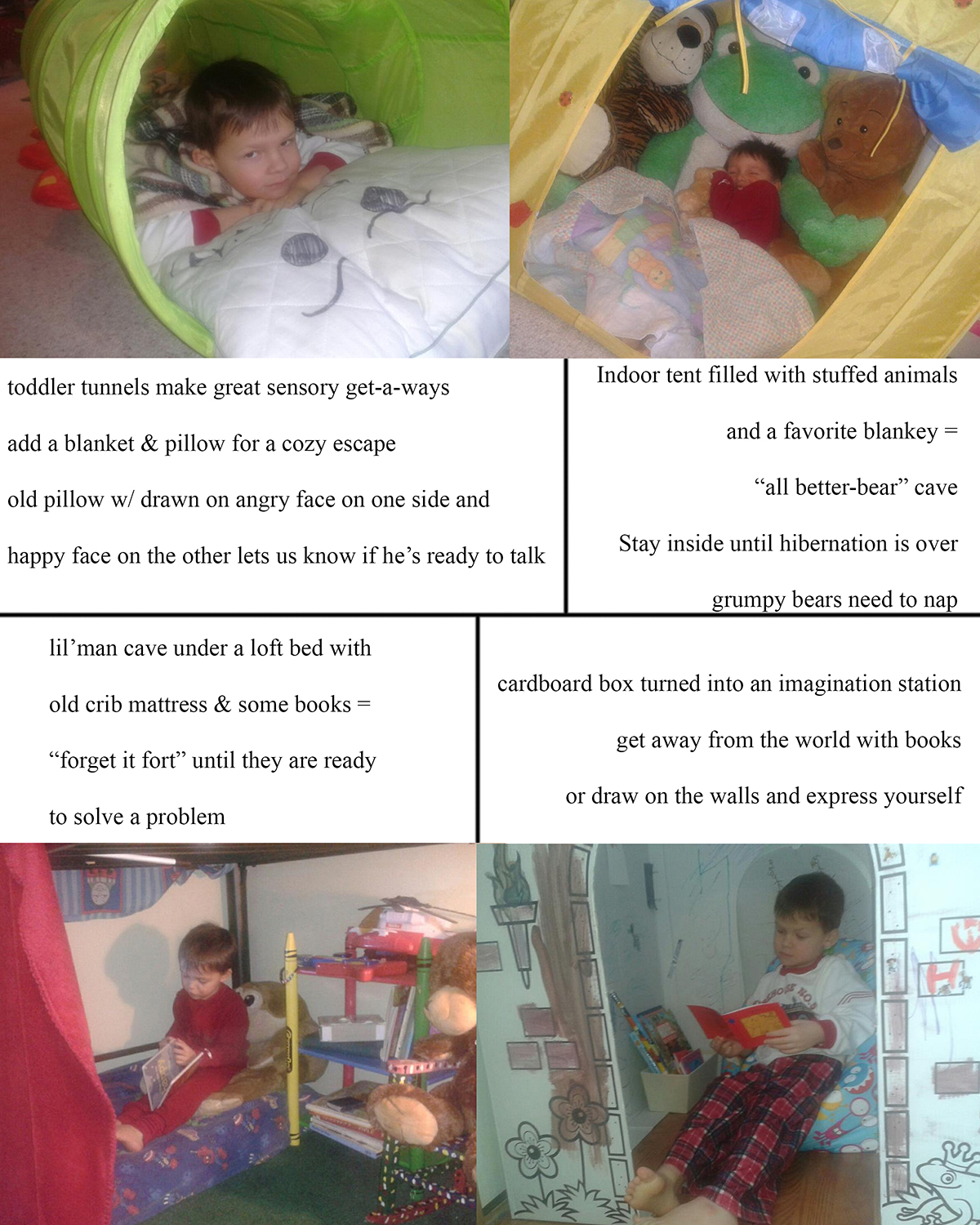
Like I said at the end of our last blog, no matter how scheduled your day is and how appropriate your spaces are for each activity there will always be times of chaos.  Maybe a child isn’t feeling well, or is just frustrated.  Maybe you need a moment to calm yourself down and they need a spot to hang while you re-coop… Whatever the reason a comforting space is needed in every home, daycare, school, etc. So, today I thought I’d encourage you to create one more place-in-your-space, for a calm-down-corner.   This space can be their bed with their favorite blanket to snuggle, a bean-bag-chair with books nearby, or a lil’ tent with filled with stuffed animals. What ideas do you have for a quiet-space? Share them with us.  Here are some ideas we like:

getaway

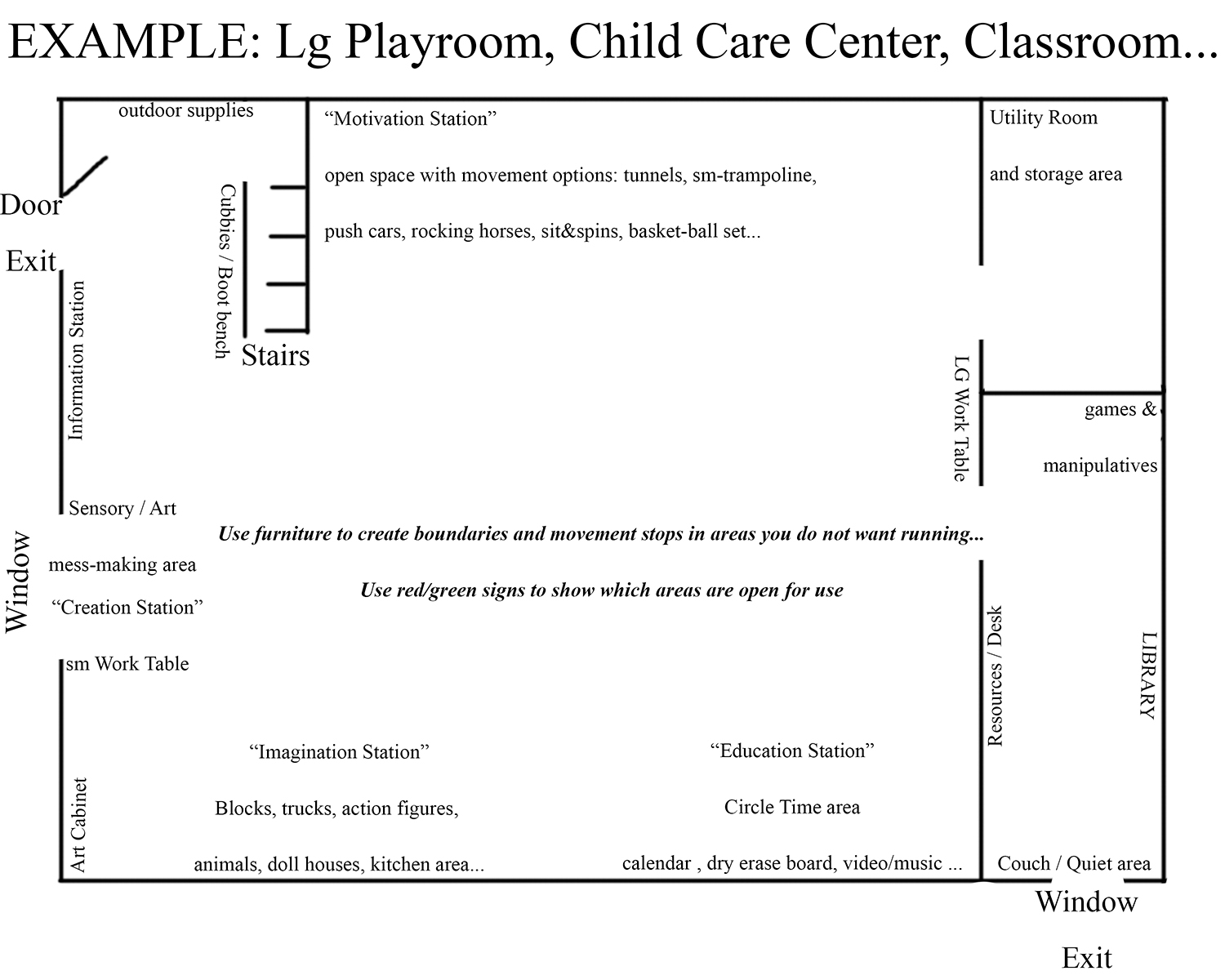
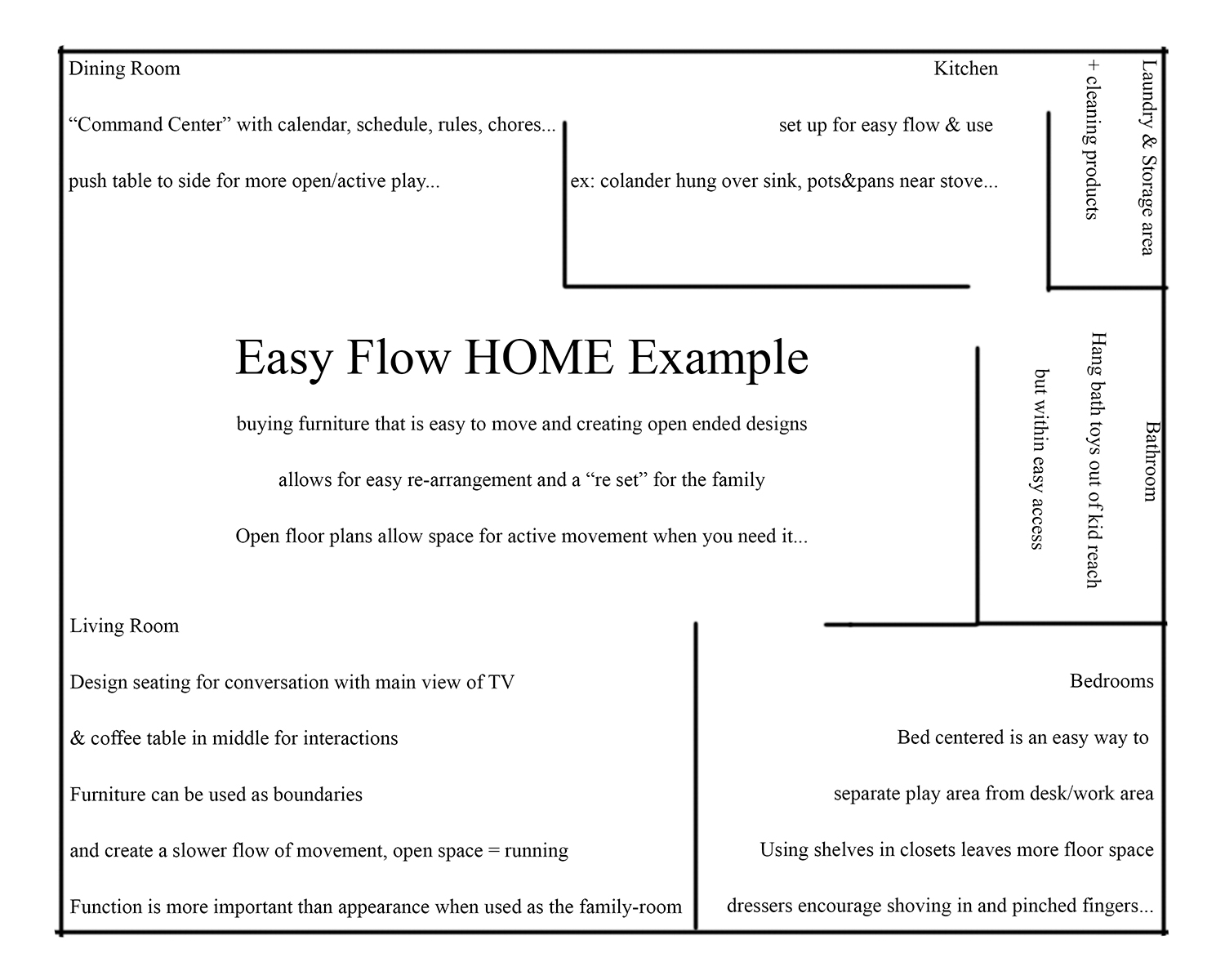
If a child is going to use such spaces for relaxing it would not work as intended in a high traffic area.  Whether you are a parent, teacher, caregiver … you need to consider if the flow of the environment works the purpose the space is used.  If the space you are working with is small consider at least separating the quiet corner from the play area with furniture.  Sometime function is more important than appearance if your goal is redesigning for calm.  Here are some example floor plans for flow design:

exROOM

house

Now – where are you in the environmental flow? Do you let kids explore freely or participate every minute with them through structured activities? Are you flexible creating times to engage yet other times to stand back? Parents/providers impact the flow so consider where you are in the big picture and how your role plays in the chaos to calm factor.  Consider your temperament.  Are you asking them to be calm when you are stressed or feeling rushed throughout the day? Kids feel that and act accordingly. So here is your homework… a few blogs back I posted a behavior chart for kids, now I want you to log your behaviors & / or moods.  If you feel like “that was a chaotic moment” write down what was going on before times got tough -how you were feeling/acting – then write down how you reacted to the chaos.  You might be surprised comparing the kid behavior charts with your own and see a pattern of how you contribute to how the environment vibe.  You might want to even start writing down when you have those “wow, it’s a calm moment” thoughts – where you are in the space, what activities are being enjoyed, how you are talking and feeling…  If you can’t stop all chaotic moments from occurring you might at least find ways to bring them back to calm.

adult-behaviors

After changing up the environment and comparing your behavior logs with kid observations you should be able to enjoy a peaceful place in space. Chaos might return some days and that’s when you pull out the logs again and reassess what changes need to be made.  Maybe a space needs to be redesigned because the kids are growing and going through different stages and use the space differently now… Maybe it’s because activities and schedules and rules need to be redefined… As time moves on so will the issues you face with the kids in your care – how you prepare them for changing times will be discussed next week… and speaking of changing times – Don’t forget to SPRING AHEAD your clocks this weekend :

Posted in Behaviors, Child Development, Chores/Housekeeping, Education, Family, Homeschool, Organization, Parents, Providers, Sensory, Uncategorized Tagged with: , , ,

Because everyone and everything needs a place in your space…

Working in ginormous Hollywood mansions, to one room Michigan school programs, I’ve noticed chaotic behaviors coming out kids!  Does this mean all kids =chaos? No, because I’ve also worked with kids in such environments and felt calm walking in the doors.  So what was the difference between other spaces? Lots of factors, but one lesson learned was that it’s not the size of the space that matters, it’s how you use it.

In previous blogs I rambled about how keeping free play toys and activities on a rotation keeps less materials out for clutter and encourages kids to care for their own materials.  Keeping items on a rotation also encourages use of different skills and uses of different senses… but consider what might over sensitize them.  For example – if you put out the loud music making toys, turn off the TV and let them focus on the music activity.  In fact – turn off the TV whenever your child is engaged in any play to encourage concentration.  Kids who are engaged are less likely to be acting out.

Now, here is where both parents and providers confuse play with chaos and have kids sit and play a video game before letting them dump a box of toys on the floors…  Play does NOT have to be calm for less chaos.  Kids NEED to play without restraint and explore and be hyper and happy and create and use their imagination… Kids NEED to make a mess. The way to keep play happy and fun and avoid the chaos – is to structure play. Let kids know when you expect them to work (chores, homework, etc) and when free play will be schedule (the younger the child the more play-breaks needed).  It also helps to let them know what choices they have to play with (2 options to start, then grow number of options).

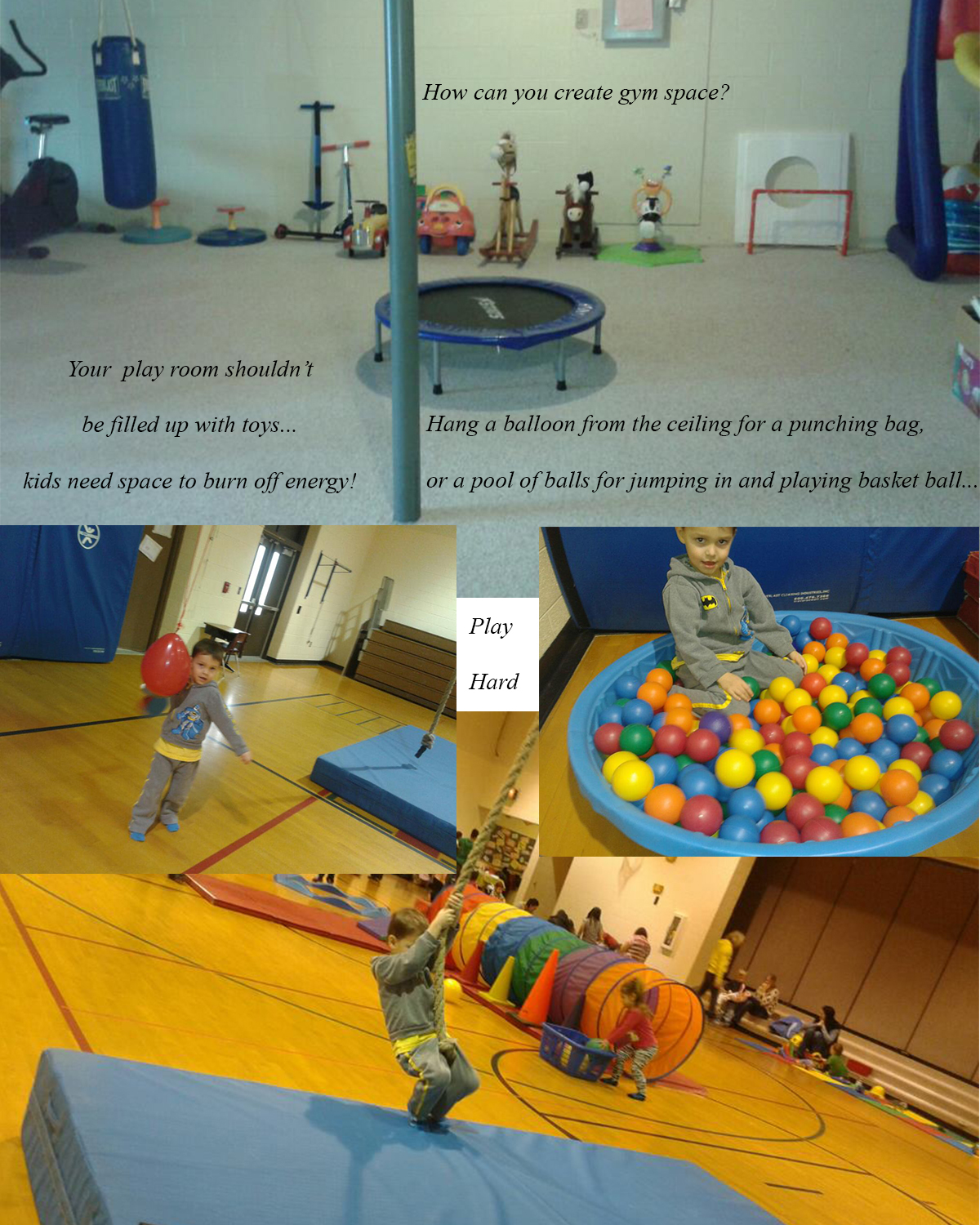
Play time can create chaos if the child is bored playing alone or is having a hard time playing with others.  learning to play with others and individually is a skill that takes practice, and if your still looking for ways to turn the chaos to calm – try focusing on play again and teaching “how to.” Engage in games, playdoh, blocks, doll houses, drawing, and cooking with your kids… But also encourage them to interact with such materials on their own.  Create a space for play… and this includes a space to let off energy.  If you don’t have open running space, can you find a spot for one of those small trampolines?

space

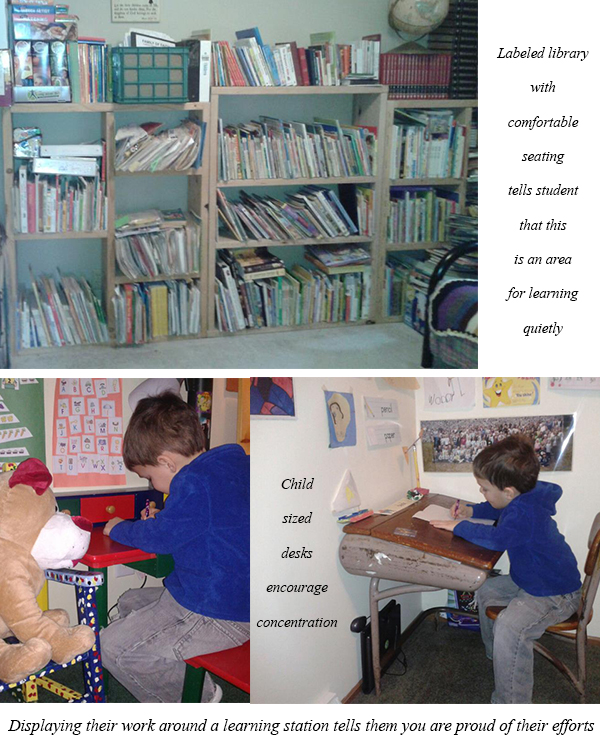
Now that we organized play time – make sure there is time and space – even for little ones – to focus and learn.  Most parents and providers admit that the easiest time to do homework is at the table, before or after a meal, while the adult is cooking or cleaning and can periodically help while multi-tasking … but a different time/space may give a child the chance to re set their brain for what is expected of them. Research shows that if the seat is their size they can concentrate better.  If you do not have access to a child-sized desk, kneeling on the floor at the coffee table may be a more size appropriate learning space.  Then again, if the coffee table is in a busy area others are hanging-out in, and the kitchen is quiet, then that’s an option.  Point is – consider the space and what you need a child to accomplish there.  If the space is appropriate it will be less chaotic.

work station

No matter how you arrange your space, and schedule your activities, there will still be times of chaos – so make sure you read next weeks blog for ideas on what to do when _ and how to create a calm down space. Between now and then take a look on our PINTEREST page for more ideas on turning chaos to calm in your home or center AND share your ideas with us!

Posted in Behaviors, Child Development, Chores/Housekeeping, Education, Family, Homeschool, Learning through Play, Meet our Director, Mi Families, Motor Skills, Organization, Parents, Providers, Sensory Tagged with: , , , , , ,

Chaos to Calm

Using the behavior log posted in our previous BLOG and using my common sense … I noticed a pattern in my boys behaviors… For instance, every time I got on the phone my kids went crazy! Every time! They needed my attention, were suddenly starving or fighting! Sound familiar to anyone else? Well, I’m sorry to say I haven’t solved the mystery of why this is – but I have found that having a “busy bag” accessible for when someone calls seems to help…

My kids know where this bag is and can grab it any time I’m on the phone, but that’s the only time (to keep it intriguing). Contents may include water bottles , a small snack, books, paper, markers…  If I know I’m going to make a call I set them up with an activity from the bag (like playdoh, which seems to be calming at our house – as opposed to saying “go play” which doesn’t seem to be directional enough). If the phone rings and an emergency happens they can get me, otherwise if they have a problem they can search the bag for an answer or wait quietly til’ I can help them.

If they decide to continue to whine, fight or have a problem I walk them (quickly, but not roughly) to their room and whisper “I’ll be back soon” and shut the door.  Yes – sometimes they throw a tantrum in there – but I know they are safe while I finish the call. When I am off the phone and they are calm I thank them for calming down, and ask what was wrong before returning to whatever I was doing before the call.  NO discussion of their behavior otherwise– they know why they were taken to their room.

If they decided to not throw a fit and use the bag or wait patiently they get huge praise when I’m off the phone and I spend a few moments giving them my undivided attention (since that’s what they were craving) before getting back on task.

I have found that the response I give them is often the “chaos to calm” key. Yes, it is important to question the who-what-when-where-why of the behavior… but also question HOW I reacted (EX: If I freak out, they continue to freak out).  I plan out how I’ll respond whenever possible and this often helps break the cycle. I plan out transitions knowing that my boys hate changing activities without warning and that often helps stop a meltdown before it starts.  I plan out options for them to pick their own veggies and that often helps picky eaters…

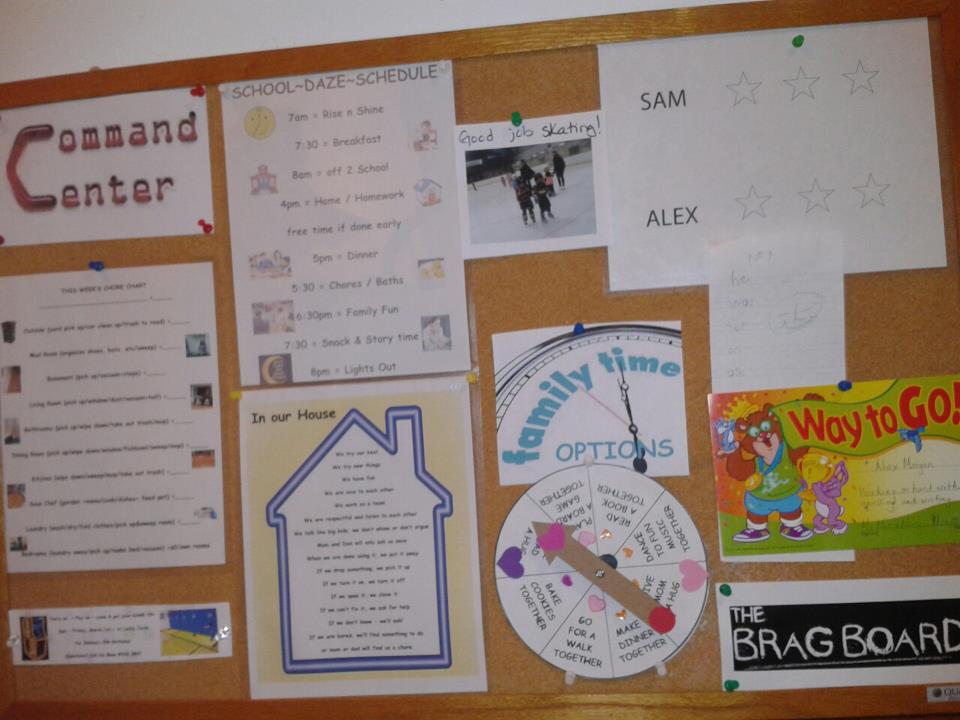
It seems like over analyzing when you start planning for and tracking everything – but for my family and families I’ve worked with – it helps! I encourage you to organize your chaos.  Keep notes of such things as behaviors in a binder.  Keep out chore charts and daily routines, post schedules and upcoming events.  List expected behaviors (not just rules) out in the open.  Display pictures of family activities and your children’s work proudly.  Let your family hear you brag about them. Focus on what areas are NOT chaotic and you may see more calm.

312366_10152605455380381_2140122928_n

“Command Center and Brag Board”

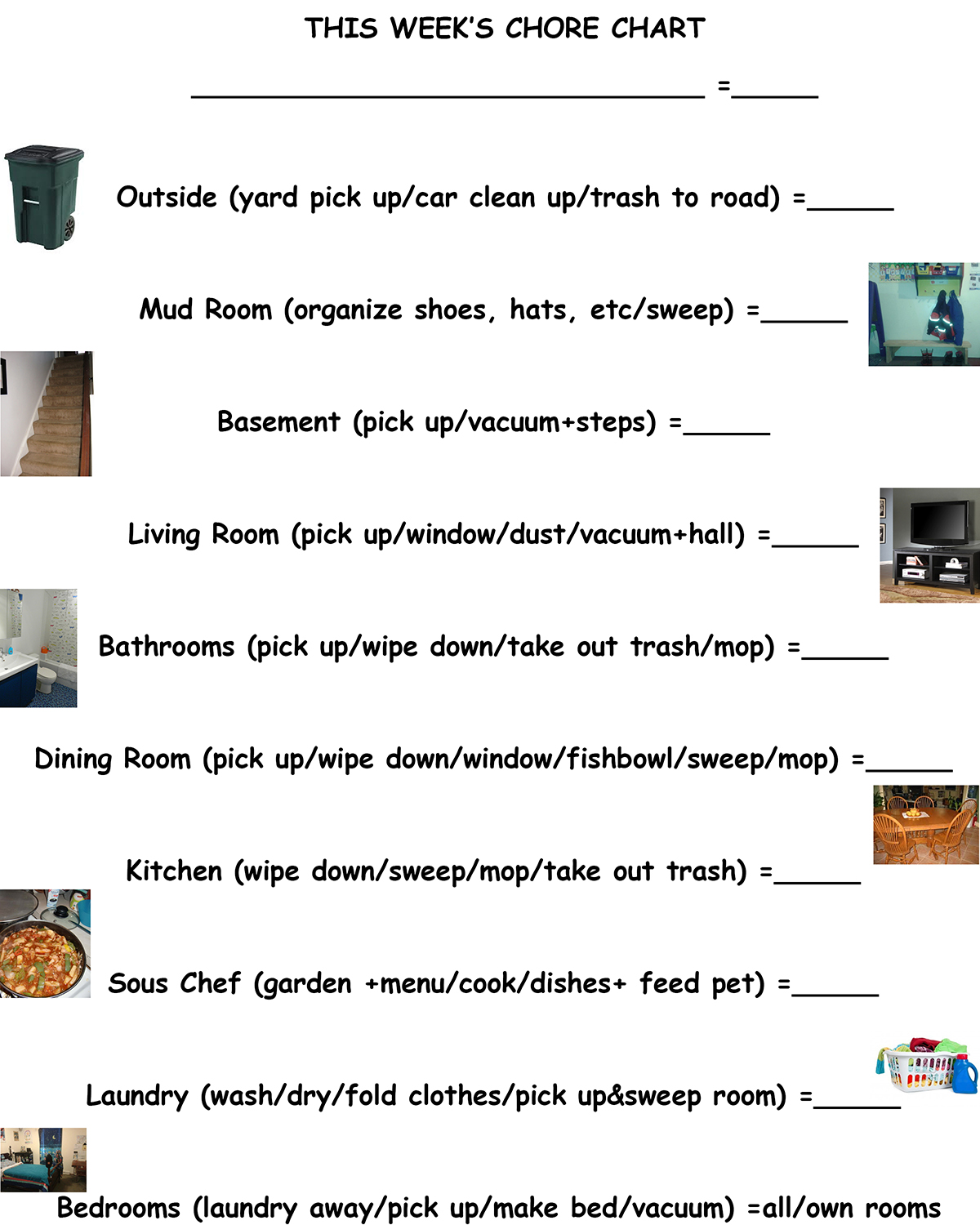
chores1

Instead of doing 1 simple task – child partners with parent to clean a whole room – from daily pick up to weekly vacuuming… Laminate w/ 1$store contact paper and use dry erase marker to write child’s name ~ switching weekly who is in charge where and the parent they partner with

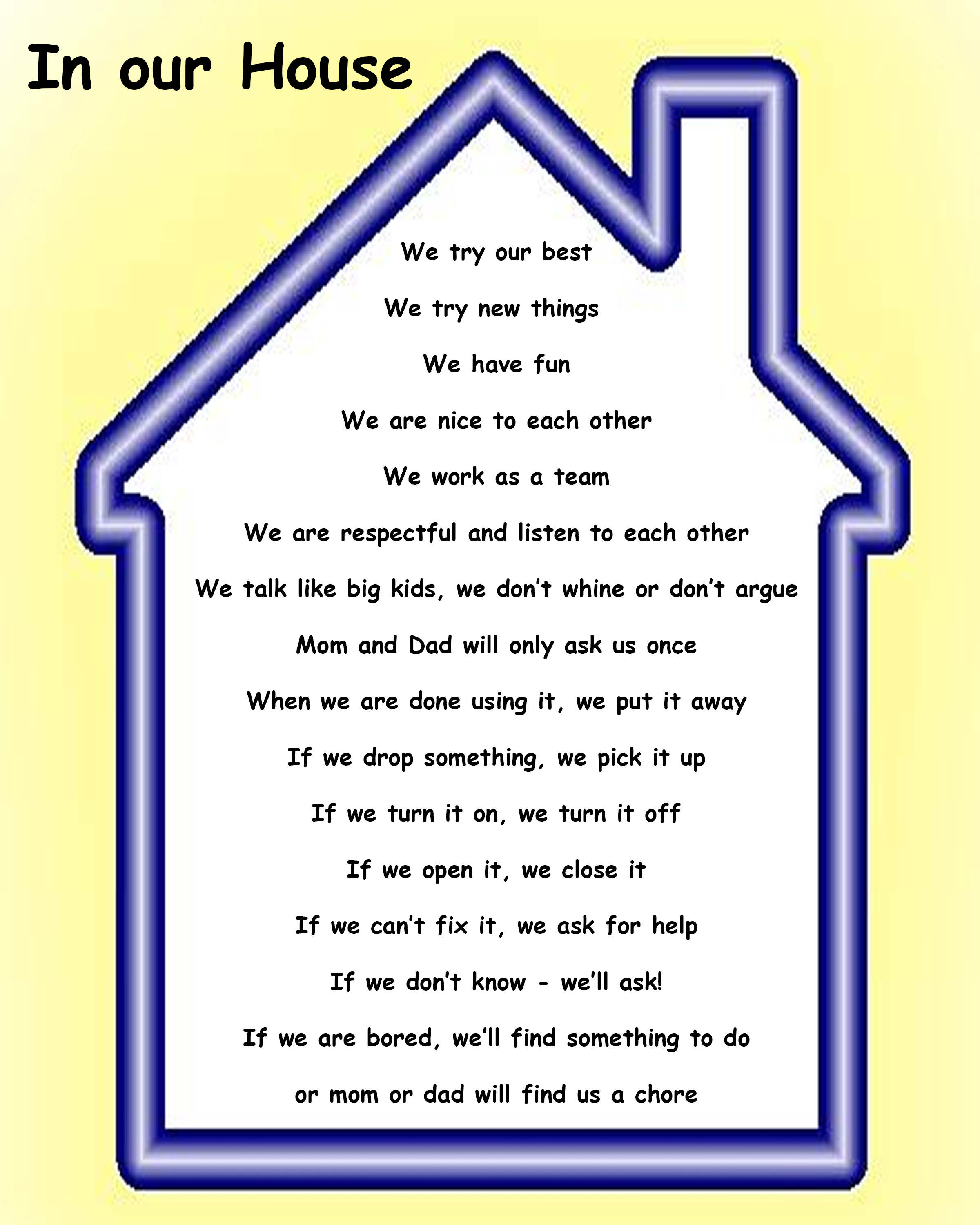
rules1

Don’t make a list of “Do not’s” ~ instead write out how you would like them to behave.

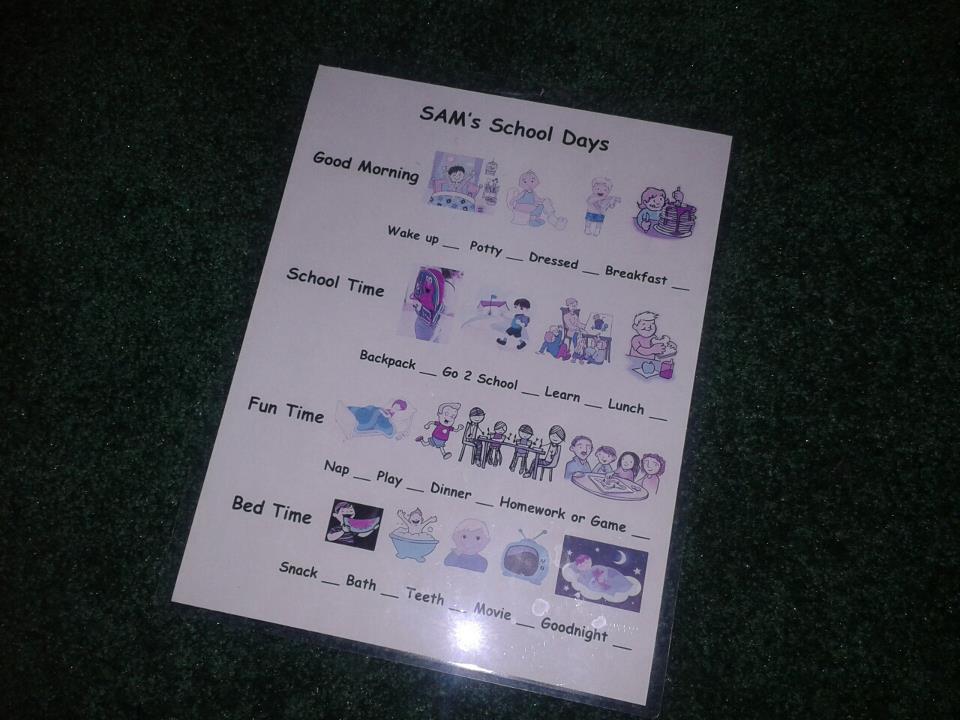
schoolDAY

use picture images to show a young child the daily routine … If schedule changes due to a “snow day” or other reason let them know what to expect to prevent anxiety

WARNING, even with more calm no house is without chaos.  Especially on those Michigan snow-days when you can’t leave the house… So what do you do when you’re stuck inside and all the plans and schedules don’t work? Make sure there is enough space in your place.  This doesn’t mean you need a mansion, it means create a calm down corner, a work station and an active area…  Read next week’s article for the how-to’s on our chaos-to-calm plan!

Posted in Behaviors, Child Development, Chores/Housekeeping, Family, Michigan, Organization, Parents, Providers, rules Tagged with: , , , , ,

Organized Chaos

Has your family made any changes based on using your senses to utilize space in your home? If you didn’t have the chance (or didn’t read our PREVIOUS BLOG) I suggest you go room to room and think by touching, smelling, tasting, seeing and hearing … Question how it’s functioning and if it could be re-organized to serve the rooms purpose better. Try not to compare your home to expensive visions you view on our pinterest site – although use the ideas to formulate a plan that works for your household needs.  If the room set up makes sense for its purpose there is less likely to be chaos in that environment.

To move forward and organize your chaos I suggest you first go backwards. Think back to setting up your child’s first environment.  Most parents design their baby’s nursery with decorations they like, with books they enjoyed as a child, with superhero’s on the wall that they want their lil’ boy to idolize (ok, that was my husbands plan 😉 …  Point is that room set ups are parent’s choice because it’s designed when your lil’ one can’t vocalize their requests and then rooms sorta just morph as the baby grows and clothes and toys accumulate = unorganized chaos – because now that baby is becoming in charge or his environment. Because of this, research suggests to start with growth in mind and leave space for the future stuff… including space for them to decorate… Then wean out items they have out-grown.  Keep rooms simple and this includes color scheme.  Parents think bright multi-colors promote an engaged atmosphere, but it really seems to just over stimulate a little one (or even yourself). Check out this site: http://nursery.about.com/od/Color-Palettes/a/Color-Psychology.htm  to learn more about color use.

Even a busy mobile over the crib can be over stimulating and discourage attention building skills, so keep the colors and supplies simple.  For babies – please consider “safe sleep” habits when choosing bedding and don’t push them into a big bed before they are ready. (Safety often gives a sense of security which gives a sense of calm vs chaos.) A too-big bed feels less secure and takes up floor space that a child needs for learning through exploration.  Also, a bed should look like a place to sleep, not a playground (I should have considered my own advice before allowing my preschooler to have a slide on his bed!). This helps children to understand what the function is of the equipment and what their job is, and that’s to go to sleep (being sleepy is often another cause for chaos).  Although racecar beds are fun, they can make bedtime a struggle. Bedtime is chaos time in many homes, so simplify creating less chaos for the mind, body AND clean up purposes.

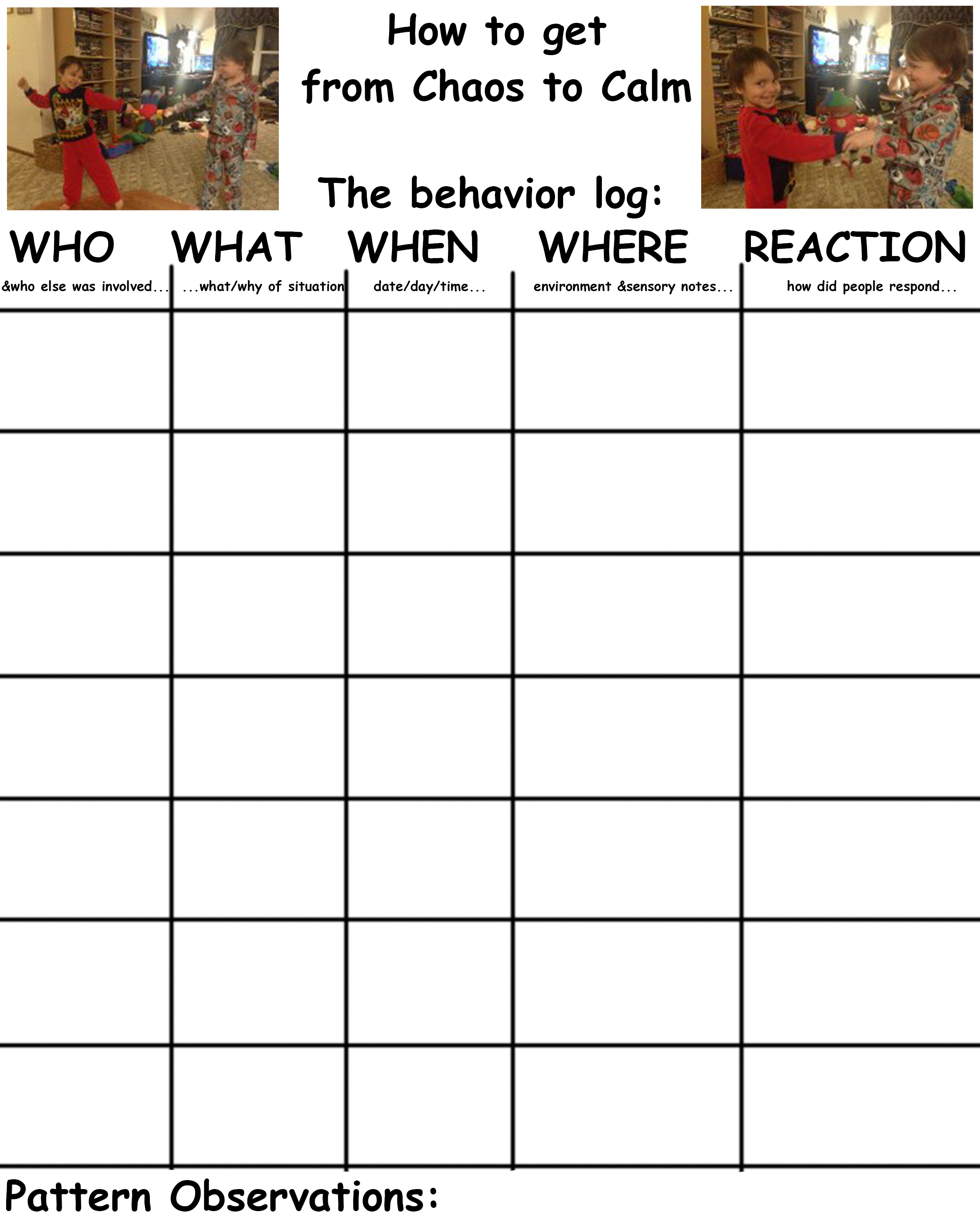
As your home starts to get organized and simplified the chaos should also.  Meaning, not that chaos stops all of sudden, but that you should be able to know when and where to predict behavior issues.  Start tracking behaviors and you’ll see what I’m talking about… Get out some paper: write down a column for WHO was having a problem (&who else was involved), a column for WHAT the behavior was, a column for WHEN the outburst was happening and a column for what environment/WHERE you were when calmed turned to chaos. You may also wanta column for your REACTION:

behavior log

8X10 printable behavior log

You’ll be surprised at patterns behaviors follow and although it may not stop the chaos, it will help you devise tools to deal with the situation.  Check out our next article to learn more…

Posted in Behaviors, Child Development, Chores/Housekeeping, Family, Organization, Parents, Safety, Sensory Tagged with: , , , , , ,

your house should make SENSE

Parents are reporting that even though kids are helping with chores (see our previous blog), their house still seems chaotic. Have you used your senses to figure out why?  You see, it’s not just about having a clean toilet and the dishes done. Clutter = chaos and everything from the set-up of furniture to the texture of the carpet, the colors on the walls, the blinking of light fixtures, the smell of a dog, and the noises from a dripping faucet … environmental senses contribute to behaviors. Doesn’t it make sense that your senses contribute to your mood?

I had a rare moment of quiet time today to do some paper work, but every little noise the house made was making me feel paranoid, so I thought I’d get up and do some chores (sound sense = felt nervous = reaction was to distract by cleaning).  I became annoyed because chores seemed to be taking too long and I hada whole list of to-do’s ahead of me … So, I stepped back and assessed the situation and questioned how to optimize time (which added time, but was later beneficial).

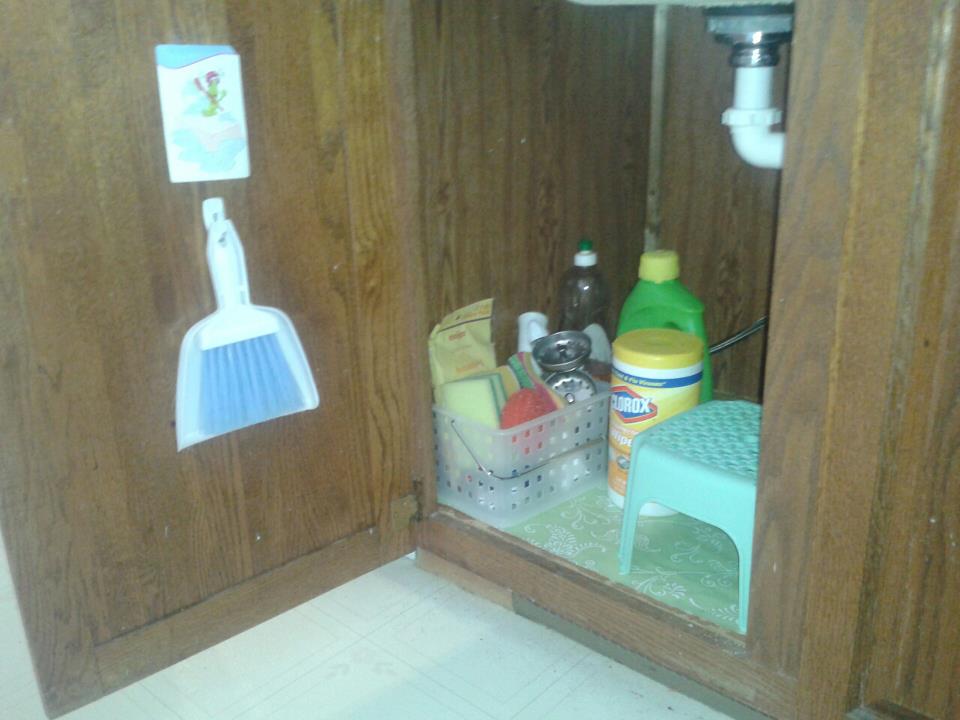
Since keeping supplies at a consistent and easy to reach location is often key to clean-up flow, I rearranged things where they would be easy to use and put back away quickly. My colander is now hanging above my sink – because I use the colander to drain things in the sink. Not rocket science, I just took some time (to save time later) … Part of my chaos contained = happy mom.  Although most cleaning products are on a shelf in the laundry room, some things need to be accessible in the kitchen for quick clean ups – and easily accessible for kids to learn how to clean up their own messes.  So, I rearranged under the sink with a lil’ broom, stool, etc… to encourage independence = happy mom:

539817_10152552382675381_651684440_n

kid clean up cabinet

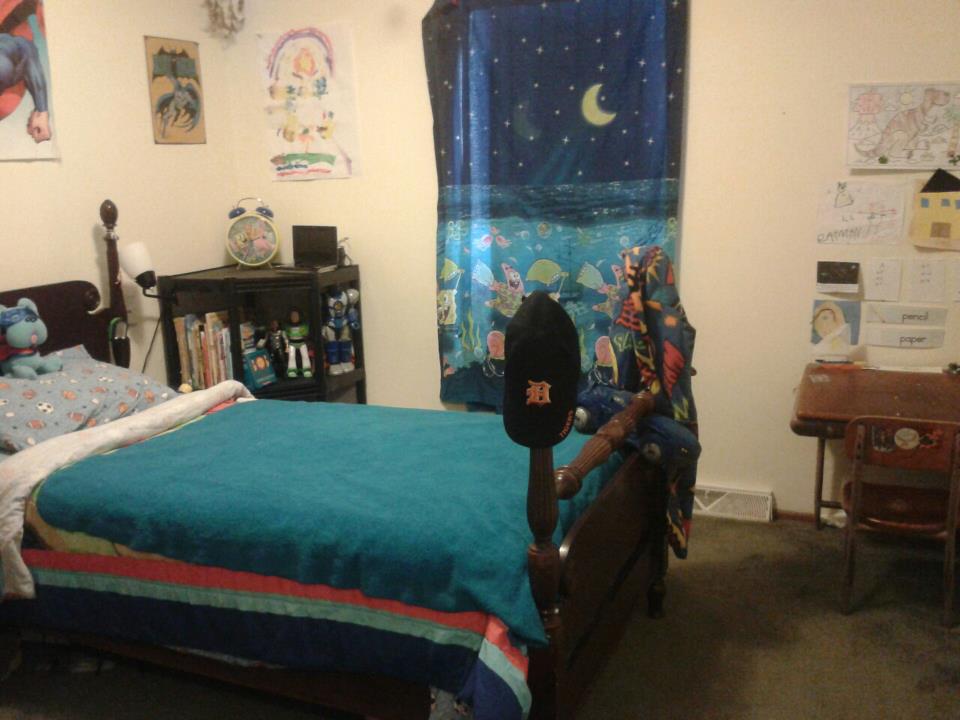
Later I had my kids use their senses and re-arrange other areas to encourage independence & calm activities = happy & calm kids. Well, here is how my 6yr old designed his own room:

555899_10152552383775381_1709968567_n

room designed by a 1st grader


This picture may not be worth pinning – but it shows that it’s HIS room, it’s not adult styled.  HIS interests are displayed, but not over-stimulating.  Toys are accessible, but limited, and we switch out what toys (and desk supplies) are available to keep him entertained….  ALL his clothes are in his closet so no dresser is needed creating more floor space (shelves in the closet make it easy for him to put own clothes away).  We simplified and smallified (ok I made up that word) … because by making things child-sized we encouraged competence and comfort.  By allowing him to decide on decorations and materials he gains a sense of pride, which results in becoming accountable for his own belongings. You’ll find that when kids care about their belongings and independence is encouraged your ears won’t hear “I’m bored” as often – which is often when chaos starts. Chaos is also minimal when kids understand what is expected of them.  Give structure, but also options.  Try posting a schedule of “what time is it” and offering activities for when they really are board.  “It’s play time, would you rather play with blocks, or trains or color?”

379202_10152552383150381_683301822_n

preschoolers laminated picture schedule – use dry erase marker 2 check off…


Now it’s your turn. Re-sense your home creating independence by providing tools and re-organizing to save time.  Another time for chaos is when parents/caregivers are busy – so create time savors so you have more time to interact.  Create quick clean-up ways to add time for more play = chaos to calm = happy home.

Some ideas for organization and housekeeping have been added to our Pinterest link.

Also check out these books by Logrippo:

In My World: Designing Living & Learning Environments

http://www.amazon.com/In-My-World-Designing-Environments/dp/0471111627

In My Room: Designing for and With Children

http://www.amazon.com/In-My-Room-Designing-Children/dp/0449901939

Check out our blog next week for more ideas & resources!

Posted in Chores/Housekeeping, Organization, Sensory Tagged with: , , ,

Kids & CHORES

Ideas and questions are rolling in and its’ hard to pick where to continue, but since a couple parents latched on to the kids taking care of their own belongings – we’ll go that direction.

In the LAST BLOG I mentioned our star chart idea for encouraging independent clean-up with my own kids.  I’m happy to announce that it’s been working.  In fact because the stars worked I can now replace old star points with harder tasks – like: 1 star for cleaning up ALL your stuff (this includes everything from their backpacks to their toys…), next star is for helping with an extra parent – assigned chore (like put away dishes or fold laundry), third star is for if we see a kid doing a chore without being asked.  The same rewards / penalties as the last chart.  While working in homes I’ve found that if you change up how they earn the stars the chart ideas don’t fade out so quickly (and you don’t need to up the reward).  Just make sure they understand the first chart and follow through before any changes.

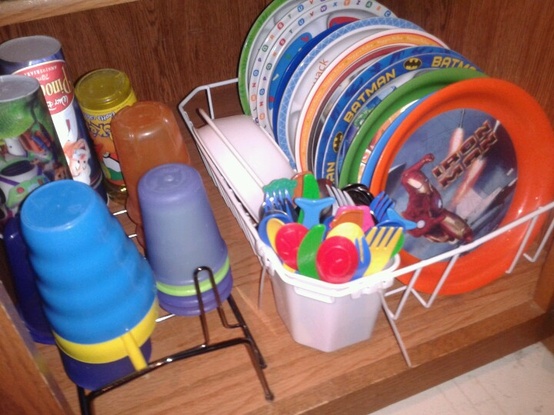
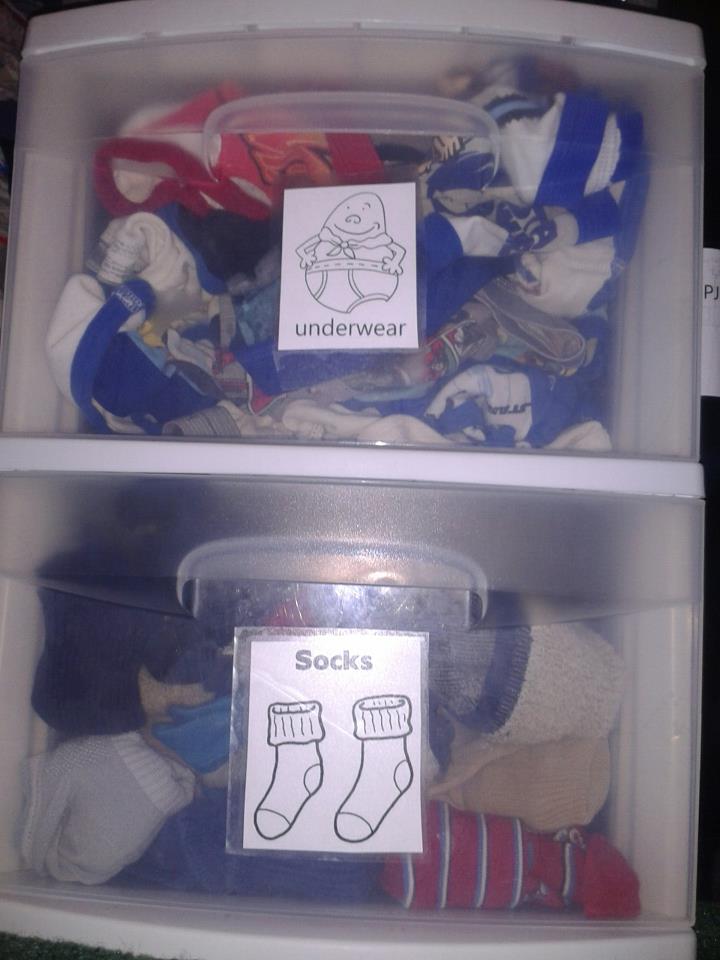
Consider purchasing small sized tools, such as lil’ brooms …  and storing rags within reach for inevitable spills. When things are smaller and accessible kids can control their own environment and therefore feel more empowered to help out and care for themselves.  Often this is where chaos starts… “I wanta do it all by myself, but I can’t!” So make everything you can (not the cleaning products, knives, etc…) accessible to them. Create storage bins that they can easily see what’s inside of with clear containers, open shelves, or pictured labels.

437552920016361352_LMTLWWWW_c

Placing a dish & shoe rack in a bottom cupboard allows kids to set their own place and put away their own dishes

14914_10152492952880381_594548888_n

labeled / see-thru drawers helps kids put away their own laundry

778864_10152492953390381_1296176109_o

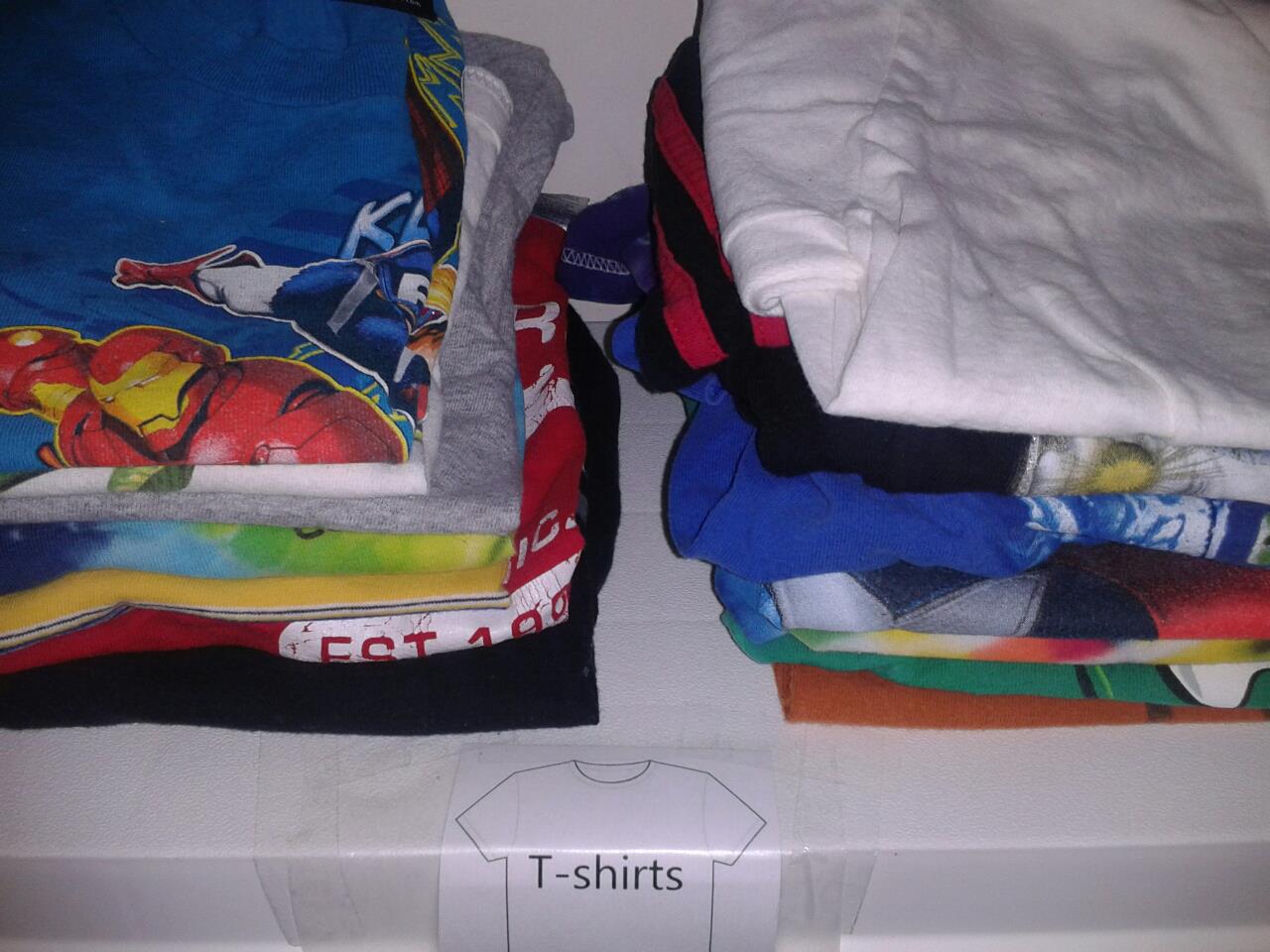
labeled shelves in a closet is great for space-saving (no dresser needed in room)

843875_10152492947405381_1147709934_o

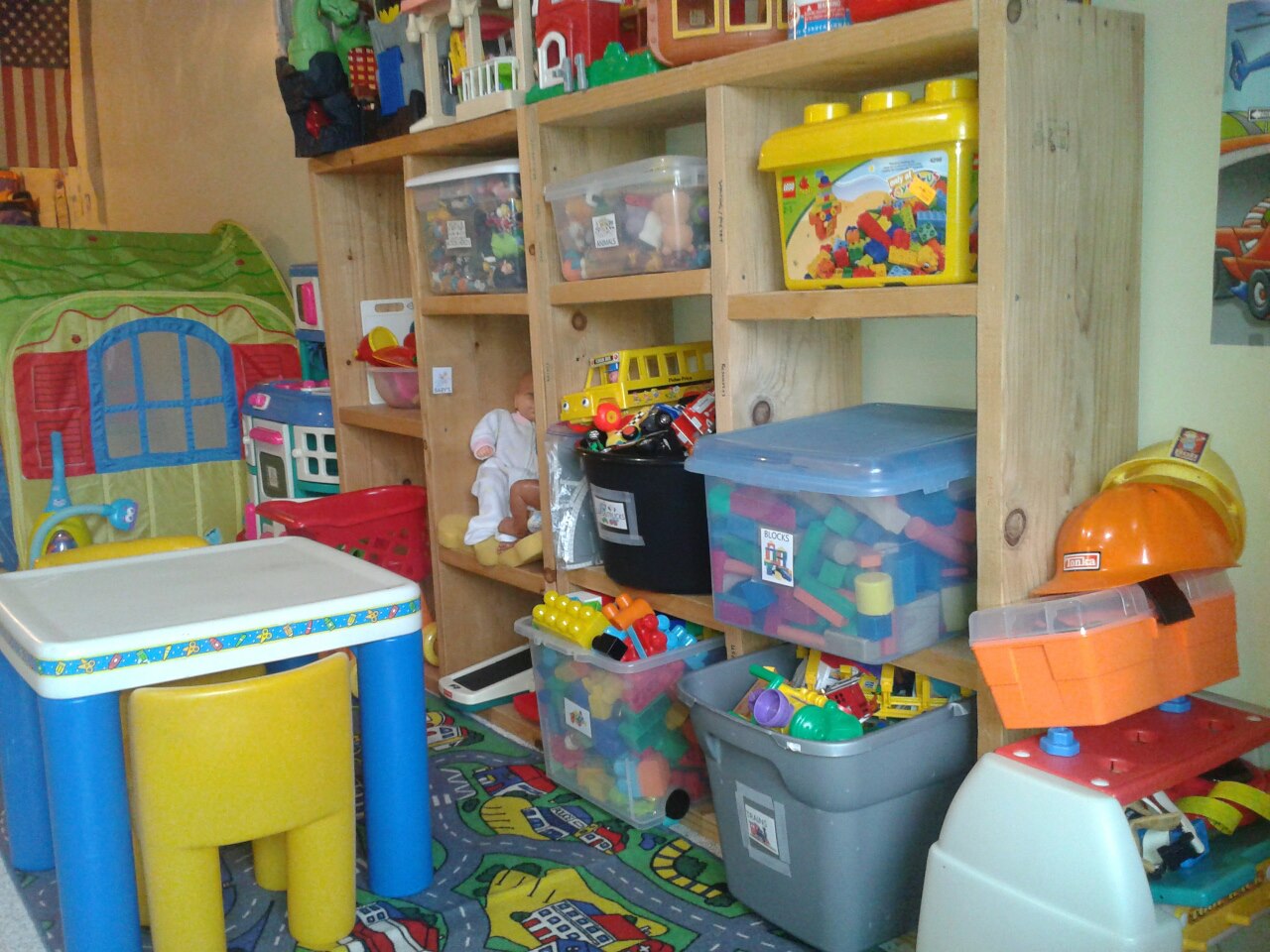
labels on containers and shelves make for easy matching and quick clean-up

I recommend limiting the number of toys, games, etc… that are available for “free play” times.  Keep everything else out of reach – and sight. We keep most things in the basement / play room, but limit what is in bedrooms for less chaos and easier clean up.  Our kids enjoy changing what toys are in their rooms. Have you tried rotating toys in and out of circulation? Let your kids pick which ones they want out, encouraging them to try new things and not to just stick with their favorites every day. They will become more engaged in activities and be more encouraged to care for their things.  Before you know it their space with go from this …

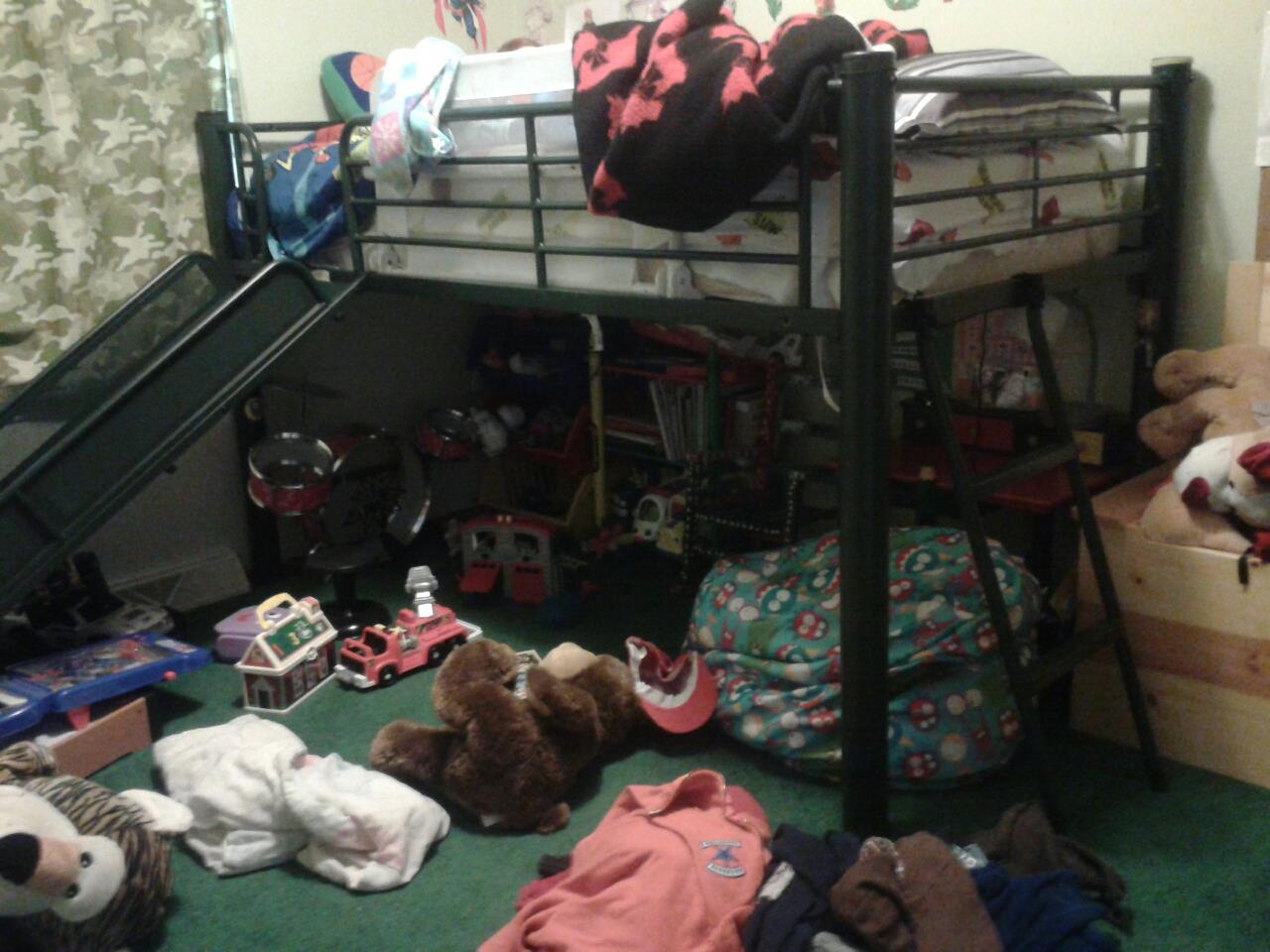
792147_10152493011465381_1578932933_o

preschoolers-mess created from too many things and not adequate storage in a small room…

843020_10152493011165381_1173469680_o

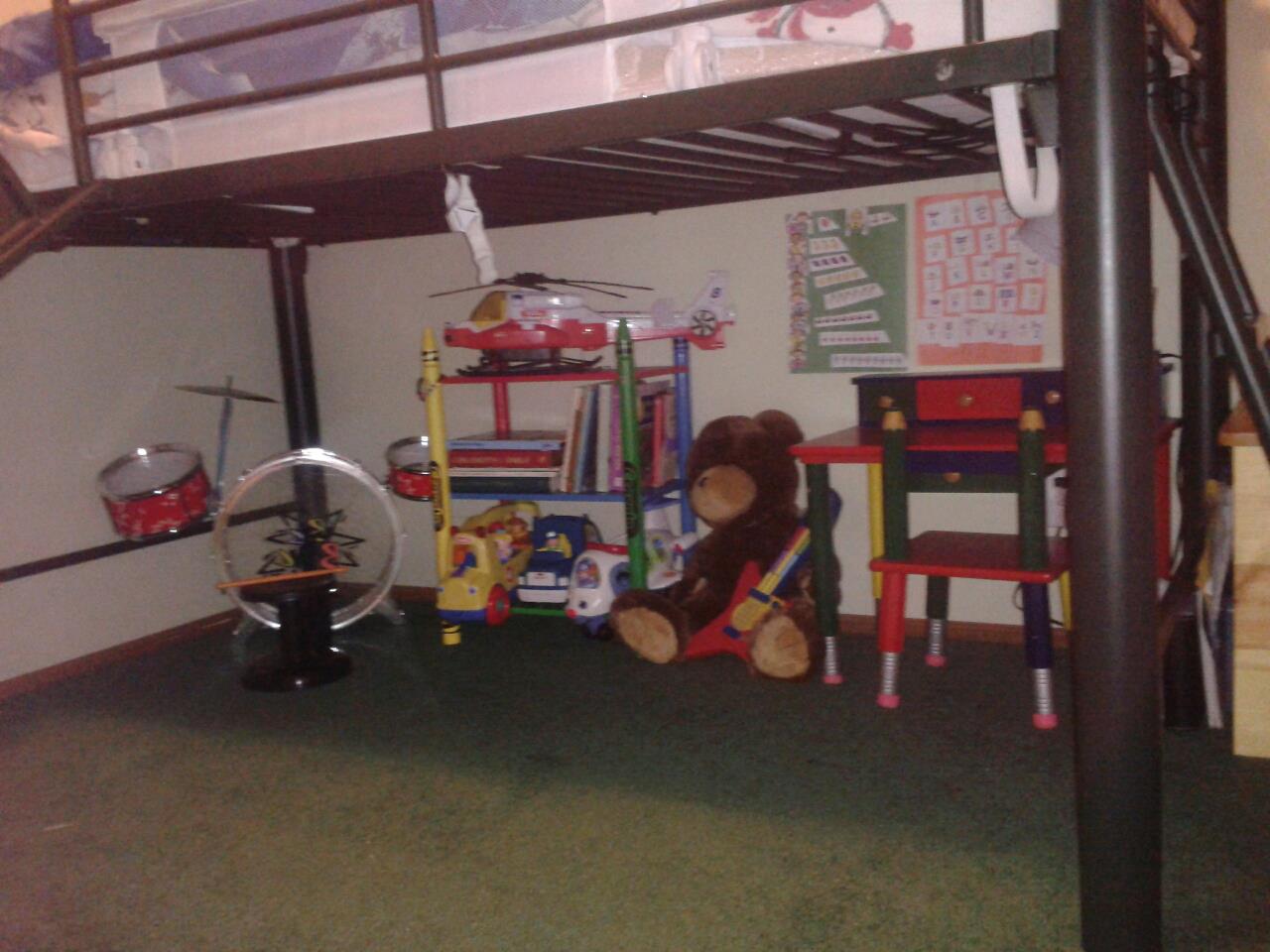
preschoolers can clean up too! … when they have limited options and marked spaces for belongings. Note the convenience of a loft in a small room = play area

To This! And they will be proud of themselves because they did it – themselves!

As you can see, we don’t have the fanciest of shelves or organizational bins – we just use what we have, what we can build, or what we can find at the dollar store…  Organization doesn’t have to be expensive and time consuming.  In fact – until you’re sure that your kids are past the drawing on things with crayons stage – I wouldn’t buy the best equipment / furniture – I would buy durable and washable … and teach them to wash it up! For ideas on age/stage appropriate chores – check out housekeeping & organization tips on our Pinterest site.

Posted in Chores/Housekeeping, Family, Organization, Parents, Reward Chart Tagged with: , , , ,

Subscriber Homework

Homework.  Our kids have it and so should we.  Like I said in the last blog “we never stop learning.”  And apparently some of you want to learn about organization. So, I went back to the learning board myself – or rather our Pinterest board, and added some ideas for you!

I have to laugh at a post someone sent me that said “stop pinning and make things.”  How often do you do that? I have so many ideas – but not the time or the money to do it all.  I try and keep our home clean and organized – but I also let my kids (and husband) live there – so at times there are tents set up in our living room, or playdoh stuck to dining room table.  My boys are 4&6 years old now, so we are starting to have lil’ helpers around – but sometimes their help seems to only add to the mess!  And even with little helpers I find that the old way I organized the house doesn’t always work for todays needs.  Because the needs for each space seem to often change I re-visited every corner in the house to see where to start. To do lists change even more so I re-visited my planner as well.

I’ve been asked to help with organization, but now I have to ask you – in what way? Here’s another homework assignment for you: Do as I did. Re-visit how you clean, how spaces are used, how you schedule your appointments, how you plan meals… What areas do you need to re-design? What specific areas of organization do you want info on? While I await such answers I’ll move forward on where I need to re-structure, and I thought I’d restructure where the house starts.  When people enter the house I don’t want them to see this:

251984_10152471780235381_157002325_n

dump corner

But if you visit us at the end of a week – after running in and out for work, school, doctor appointments, therapies, sports, etc… – This is how it sometimes looked.  Like many Northern Michigan homes our front door is not really what’s used. Many local entrances are “mud rooms” in a garage or basement…but it doesn’t haveta look like the reason it’s called a “mud room.”  So after a bit of cleaning (and bench building) – it now looks like:

406082_10152471780780381_831500030_n

organized dump w/ boot bench &box

740081_10152471803130381_2014946262_o

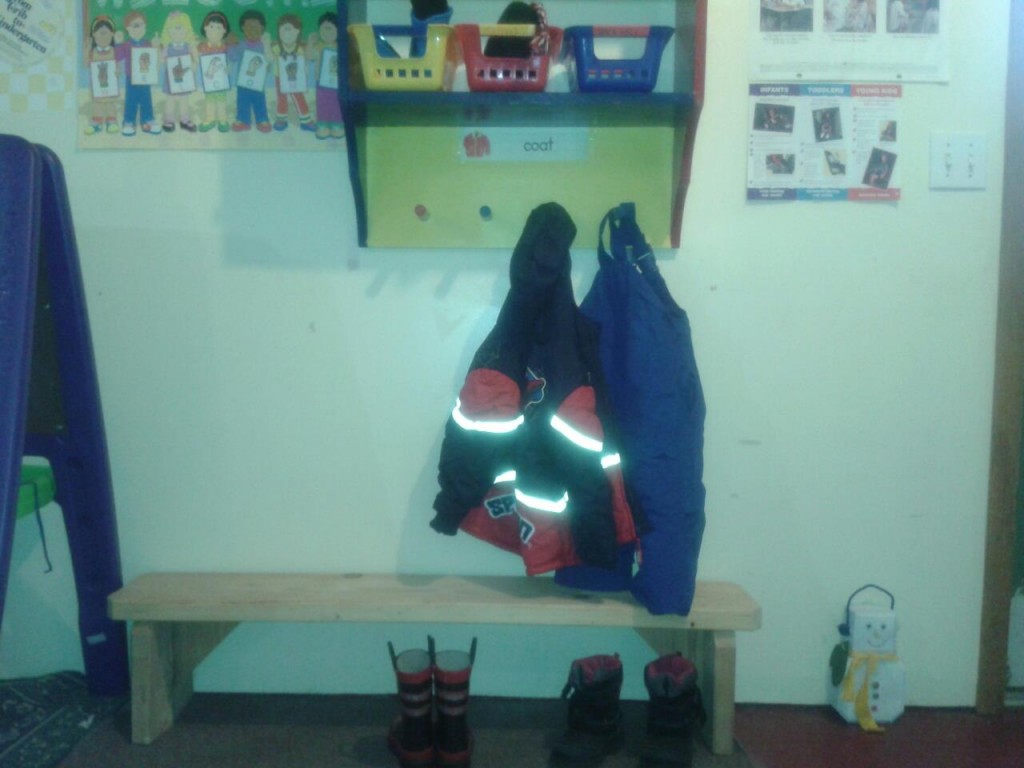
kid corner with reachable coat hooks,
mitten baskets & boot bench

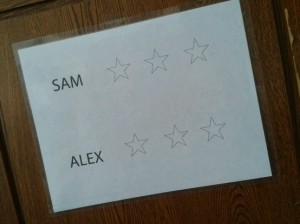
No, it’s not Pinterest worthy…yet…but it’s a start.  It’s a place to start and end the day.  It was a quick and cheap fix that solves the problem of everything needing a place to go and everyone (even preschoolers) being able to take care of their own belongings. Now, let’s see if the boys (and their dad) follow this plan. Don’tcha hate when you put all the effort into a plan and the rest of the family doesn’t follow it? Well to encourage less clean up of shoes and such for me I developed the star chart (laminate a print off & use a dry erase marker to color in):

437552920016622331_l8S7hpXW_c

easy chore chart

Get your own stuff ready each morning = star, Put your stuff away when you get home = star, Help with another chore = star, 3 stars = 30 mins free time (to play with video games or other demanded activities, such as stay up late) … each missing star = an extra chore or 10 mins less time/early bed…  How do you encourage your family members to help out with the chores? Share your ideas with us on keeping things clean and tidy and remember to let us know what other areas of organization you want ideas for! Challenge us to find ways to create simple – yet effective – solutions and resources for you.

Posted in Chores/Housekeeping, Education, Family, Organization, Parents, Providers, Reward Chart Tagged with: , , , , ,